
 3 months ago
12783
3 months ago
12783
.png)
Recent insights have shown a substantial connection between Bitcoin‘s price trends and the liquidity strategies of the US Federal Reserve. Alphractal, a crypto research platform, has presented a detailed analysis indicating that fluctuations in Fed liquidity, particularly via certain key instruments, are strongly linked with Bitcoin’s volatility.
Alphractal’s study primarily focuses on two Federal Reserve mechanisms: the Reverse Repo Facility (RRP) and the Treasury General Account (TGA). These methods significantly influence cash flow within markets and thus affect cryptocurrency performance. Their findings reveal that from 2020 to 2021, the combined balances of RRP and TGA expanded from $2 trillion to $7 trillion, during which Bitcoin prices soared from $10,000 to $69,000.
“For three years we have tracked Federal Reserve liquidity movements alongside the Bitcoin price. The Fed’s RRP and TGA shifts are among the market’s most underrated macro signals,” remarked Alphractal in a recent statement.
Alphractal observed that the 2022 tightening policies saw Bitcoin plummet from $69,000 to $15,500. In contrast, between 2023 and 2024, a shift of money market funds into short-term Treasuries and a steady drop in RRP balances corresponded with Bitcoin’s recovery to as high as $73,000. The platform anticipates Bitcoin peaking at roughly $126,200 by October 2025, even as liquidity indicators currently show signs of strain.
Will Market Crashes Repeat in Future Cycles?
VirtualBacon has amplified the discourse by examining past Bitcoin bear markets and their correlation with anticipated cycle-end crashes. Interestingly, historical evidence suggests that such dramatic drops are uncommon, contrary to market expectations.
Their analysis of the 2015, 2018, and 2022 cycles reveals that only the latter saw a significant capitulation at its conclusion, whereas earlier cycles reached their nadir soon after an initial major downturn, subsequently entering a phase of recovery.

The 200-week simple moving average for Bitcoin has historically represented crucial support, currently near $61,000 and estimated to rise to between $63,000 and $64,000 in the upcoming months.
Federal Reserve policies, market sentiment, and liquidity forecasts shape Bitcoin’s economic prospects:
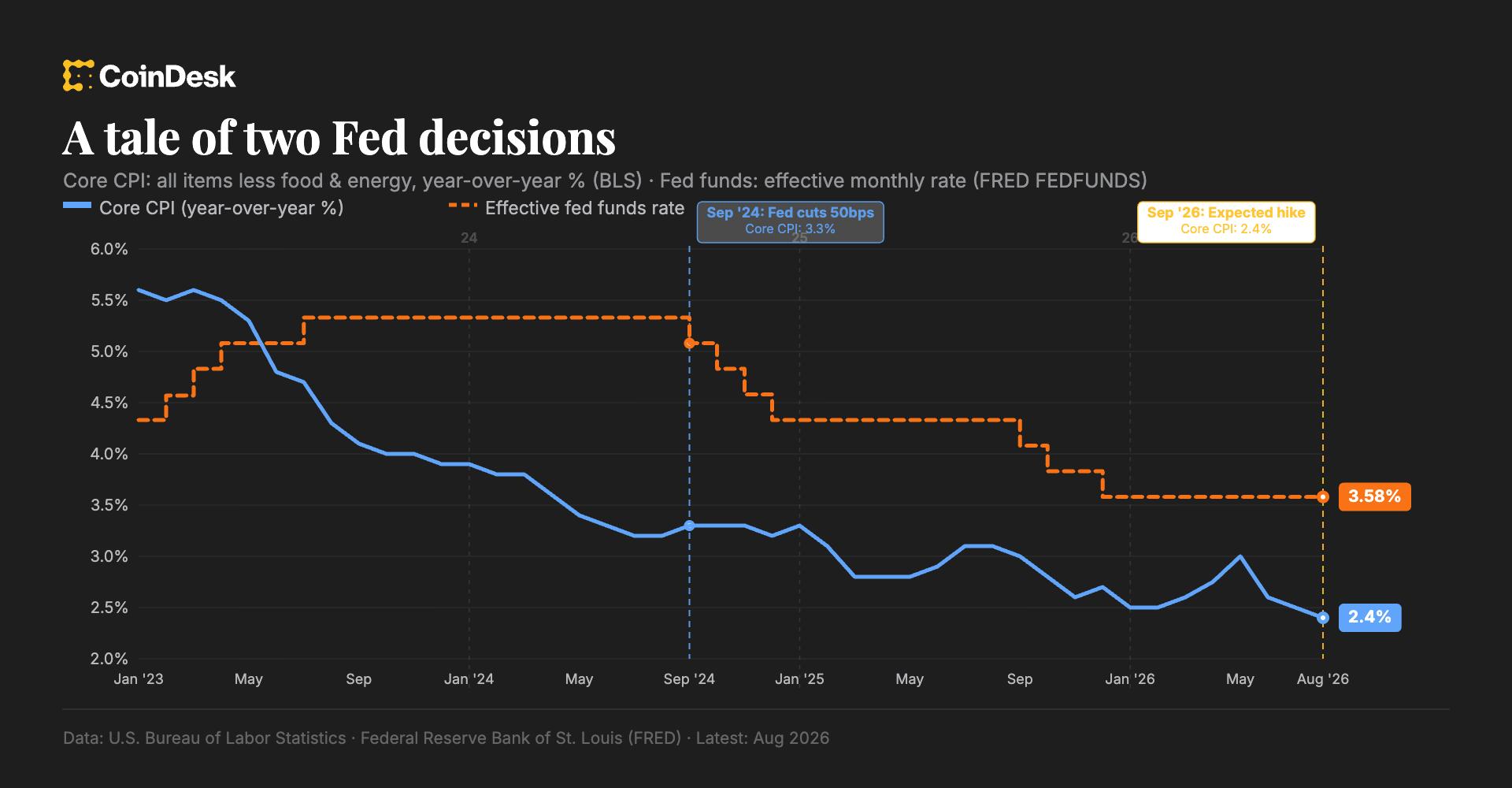
– Fed policies set rates between 3.5% and 3.75%
– Consumer inflation recently at 3.8%
– US dollar index strong but fluctuating
– Continued Treasury spending boosts liquidity
– Historical patterns suggest these factors can lead to Bitcoin recovery
“Most players in the crypto market hesitate to buy Bitcoin before a big final crash, but past cycles show this scenario doesn’t always play out,” said VirtualBacon.
Fed and Treasury actions continue to be pivotal in assessing market liquidity and Bitcoin’s potential future. Observers use the 200-week moving average as a significant measure to ascertain long-term support in the market terrain.
Disclaimer: The information contained in this article does not constitute investment advice. Investors should be aware that cryptocurrencies carry high volatility and therefore risk, and should conduct their own research.


















 English (US)