
 3 months ago
12540
3 months ago
12540
.png)
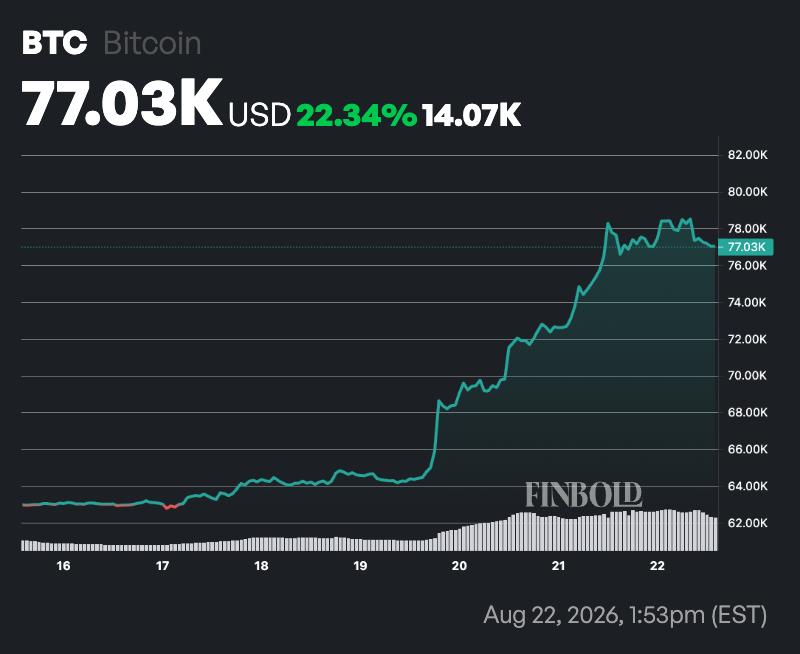
April witnessed significant movements in the cryptocurrency sector as Bitcoin’s value surged by nearly 12%, reflecting bullish sentiments seen on U.S. stock exchanges driven by robust earnings from major tech companies. Yet, newly released inflation data from the U.S. has introduced a note of caution among market participants.
Record-Breaking Moments for U.S. Market Indices
The S&P 500 index rallied to a historic peak of 7,220 points, spurred by impressive earnings from tech giants like Google and Apple. It eventually settled marginally lower by the close of trading. Charlie Bilello, a renowned market analyst, emphasized the index’s decade-long climb—highlighting its growth from 2,100 points ten years ago to present levels.
This optimism spurred by the tech sector’s strong performance has inflated the S&P 500’s total market value by over $8 trillion since the conclusion of March.
How Is Inflation Influencing Bitcoin?
The U.S. Bureau of Economic Analysis disclosed that the personal consumption expenditures inflation rate hit 3.5% in March, marking the highest rate since August of the previous year. Given its stature as the Federal Reserve’s favored inflation measure, this announcement drew considerable attention from financial market players.
Despite persistent inflationary pressures, investor appetite for risk remained buoyant. Reports from CryptoAppsy show that Bitcoin approached $77,500 by April’s end, underscoring one of the digital currency’s strongest monthly performances this year.

Nevertheless, Bitcoin has struggled to secure and maintain key technical support levels. CoinGlass data reveals that while there was an 11.9% growth in its value, Bitcoin has yet to convincingly cross its 21-week exponential moving average consistently, a level breached sustainably only once since October of last year.
Market strategist Rekt Capital remarked on Bitcoin’s volatile standing: “If Bitcoin cannot establish a position above the EMA by the weekly close, this could be viewed as a strong rejection.” A retest in the mid-$60,000s would be necessary to confirm a true breakout, he added.
Despite these gains, caution remains, as experts stress the need for additional technical signs to confirm the onset of a sustained bull market. The intertwining of fluctuating macroeconomic data with rising inflation is weighing on broad market sentiment.
With U.S. inflation reaching a three-year peak, alongside global geopolitical tensions, the financial community is keenly awaiting further economic data. While Bitcoin ended the month on a high note, it still battles to exceed vital technical hurdles.
- Bitcoin surged by almost 12% in April.
- The S&P 500 peaked at a record 7,220 points.
- March PCE inflation reached 3.5%, the highest since August 2023.
- Bitcoin struggles to maintain above the 21-week EMA.
As analysts continue to dissect economic indicators, the focus is on forecasting the cryptocurrency’s next move amidst a climate of eager anticipation and enduring uncertainty in global markets.
Disclaimer: The information contained in this article does not constitute investment advice. Investors should be aware that cryptocurrencies carry high volatility and therefore risk, and should conduct their own research.











 English (US)