
 3 months ago
13675
3 months ago
13675
.png)
The U.S. Senate moved a step closer to confirming Kevin Warsh as the next chair of the Federal Reserve on Wednesday.
A divided committee vote advanced his nomination. The move comes amid intensifying political scrutiny and market uncertainty.
The Senate Banking Committee approved Warsh in a 13–11 party-line vote. This clears a key procedural hurdle. It also positions him for likely confirmation by the full Senate before mid-May, when current chair Jerome Powell’s term expires.
Warsh, a former Fed governor and Wall Street financier, has pledged a “regime change” at the central bank. He signaled potential change in communication strategy. He also pointed to changes in balance sheet policy and inflation management.
However, the nomination has exposed deep political fault lines. Republicans have largely backed Warsh as a credible successor. Democrats have warned his appointment could undermine central bank independence. They point to perceived alignment with former President Donald Trump’s policy preferences.
The Fed’s policy outlook and internal tensions
Financial markets are bracing for a potentially volatile transition. Investors expect no immediate policy changes. However, divisions within the Federal Open Market Committee suggest Warsh may face resistance. This could complicate any aggressive shift in interest rate policy.
Warsh has acknowledged the likelihood of internal disagreement. He described the Fed’s policymaking process as a “family fight.” Officials remain split between inflation concerns and calls for easing.
His stance is being closely watched. He has historically been viewed as hawkish. More recent signals indicate openness to rate adjustments under specific conditions. This is particularly true if productivity gains materialize.
Crypto market implications
In digital asset markets, Warsh’s expected appointment is seen as a macro turning point. It is not viewed as a crypto-specific policy shift. Traders are focusing on liquidity and real interest rates.
Anthony Pompliano, a widely followed crypto investor and commentator, said in a recent note:
“When the Fed changes, liquidity changes — and that’s what crypto trades on.”
The remark reflects a prevailing view among crypto participants. Leadership transitions at the Fed can influence global dollar liquidity cycles. These cycles are a primary driver of risk assets, including Bitcoin.
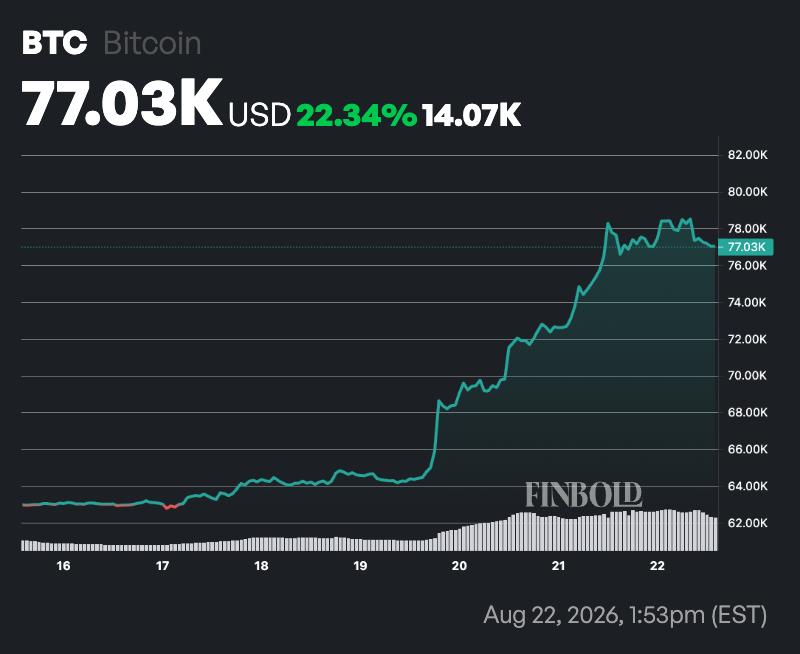
Earlier in 2026, Bitcoin prices showed sensitivity to speculation around Warsh’s nomination. Risk assets weakened as markets priced in a potentially tighter policy stance.
Warsh’s likely confirmation marks a major leadership transition in global finance this year. It comes against a backdrop of persistent inflation and geopolitical tensions. Monetary policy frameworks are also evolving.
While the immediate policy path remains uncertain, analysts broadly agree the appointment could reshape expectations around, the pace of rate cuts or hikes, the Fed’s balance sheet trajectory, and global capital flows into risk assets.
Warsh’s nomination has cleared a decisive institutional hurdle. It is widely expected to proceed to confirmation. The key question for markets is no longer whether he will lead the Fed. It is how aggressively he will attempt to redefine its policy direction. It also depends on how much resistance he will face once in office.
Don’t just read crypto news. Understand it. Subscribe to our newsletter. It's free.











 English (US)