
 1 month ago
14894
1 month ago
14894
.png)
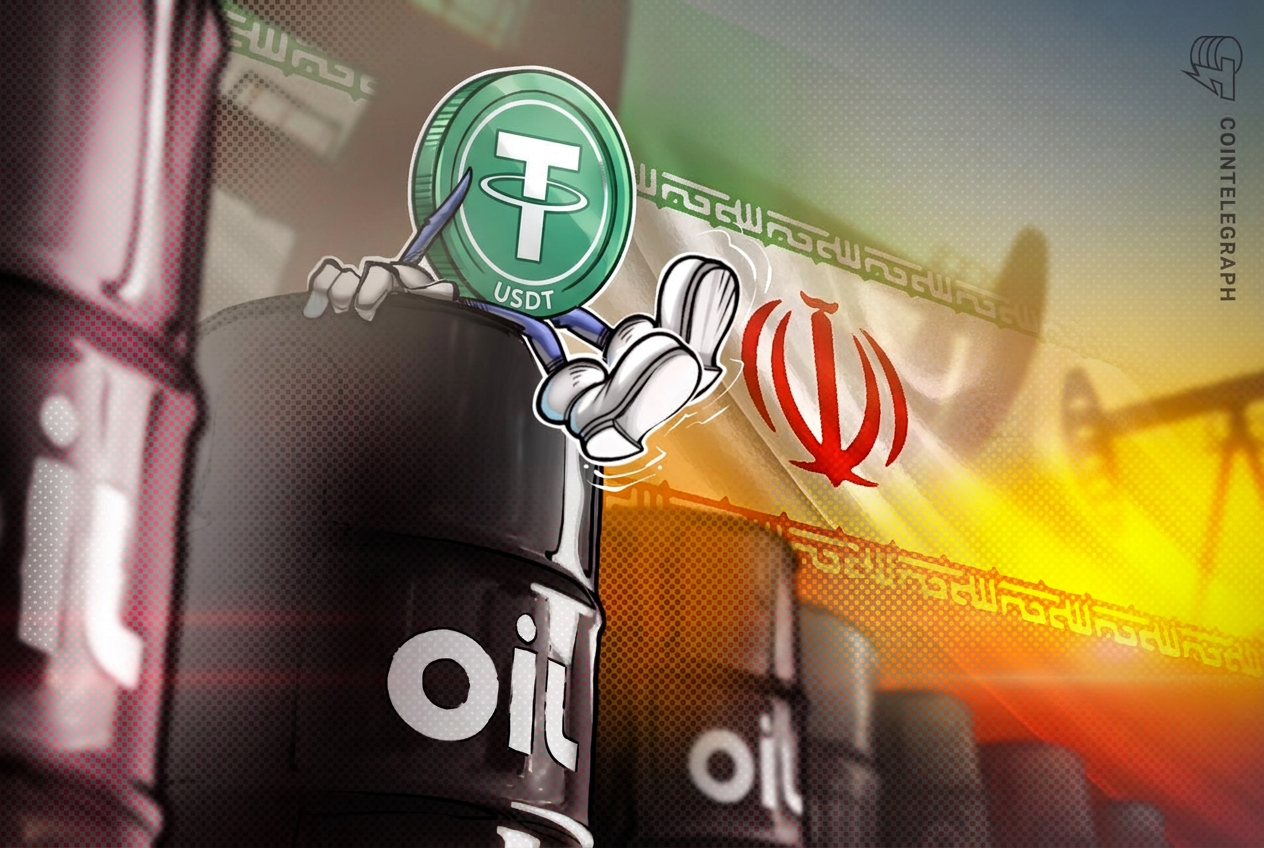
The US Treasury sanctioned two Iranian crypto exchanges, Shelbit and Aban Tether, on Friday for facilitating transactions for the Islamic Revolutionary Guard Corps. This move expands the Trump administration’s “Economic Fury” campaign.
The Treasury’s Office of Foreign Assets Control (OFAC) designated the two exchanges for processing large sums of digital assets through them to avoid sanctions and fund the IRGC and other terrorist groups designated by the US.
OFAC names founder in sanctions
According to reports, Siavash Kayvanpour, the founder of Shelbit, was also sanctioned, along with his companies in Georgia, Poland, and the UAE. However, OFAC specified the amount of crypto transferred through Shelbit. It mentioned that the Iranian exchange processed over $1 million in crypto and pulled back over $2 million from wallets associated with the IRGC.
The wallets controlled by Siavash Kayvanpour allegedly moved more than 2 million to Iran’s largest local exchange, Nobitex, which the US Treasury added to the sanctions list in June. Aban Tether, an Iranian exchange, was blacklisted for facilitating millions of dollars in transactions for Nobitex, Wallex, Bitpin, and Ramzinex, which are also on the sanctions list.
US traces Iran’s $4B crypto flows
In addition to money laundering for the Iranian government, OFAC accused Shelbit of providing services to a network of more than 2,000 gambling websites managed by two Iranian social media influencers. The exchange processed tens of millions of dollars in transactions for this network.
This information overlaps with the findings of a Reuters investigation a week earlier. It revealed that Shelbit had moved at least $4 billion in two years through its platforms. This sum was transferred via Iranian gambling sites, the Iranian central bank, and the IRGC, according to the investigation.
Part of this $4 billion reportedly passed through Binance. At least $676 million moved from Shelbit-connected wallets onto the exchange. This included roughly $540 million that went to the Iranian exchange after it was penalized by the Virtual Assets Regulatory Authority (VARA) of Dubai in January 2025 for operating without a license. Earlier, Cryptopolitan reported that US and Tether froze $131M in Iran-linked USDT on Tron.
VARA imposed another fine on Shelbit in July and ordered it to cease operations. Binance has denied having any accounts controlled by Shelbit, saying that the $540 million figure was inaccurate and that any accounts associated with Shelbit users had already been frozen and reported to authorities.
US escalates sanctions on Iran
The designations of Shelbit and Aban Tether mark the latest step in the Treasury’s year-long campaign to isolate Iran’s financial sector. In January, OFAC identified Zedcex and Zedxion crypto exchanges as the first-ever targets of the US’s Iran-specific sanctions. In June, Nobitex was added to the sanctions list, followed by four wallets associated with Iran’s central bank last month. In addition, Tether’s stablecoin froze about $131 million in response to the designations.
On Friday, the Treasury also labelled a set of foreign exchange trading companies, shell companies, and individuals involved in facilitating hundreds of millions of dollars in transactions for Iran, including those related to oil exports.
“The Iranian regime’s growing reliance on digital assets and shadow banking is yet another sign that Economic Fury is working,” said Treasury Secretary Scott Bessent. “Whether transacting in dollars, rials, or crypto, the Department of the Treasury will continue to identify and dismantle the networks that fund the Iranian regime.”
This step fits into the context of the economic and geopolitical confrontation between the US and Iran. The sanctions were imposed during the war between the US and Iran, and thus the pressure on the Iranian rial is intensifying. In addition, the pressure on exchanges and stablecoins to filter out transactions from Iranians is growing, as blockchain transactions are transparent and the OFAC is continuously monitoring them to identify new targets.
If you're reading this, you’re already ahead. Stay there with our newsletter.


![Ripple [XRP] News Roundup: $2 Billion Whale Buy Meets a Make-Or-Break Resistance Wall](https://image.coinpedia.org/wp-content/uploads/2026/07/24163919/XRP-Price-Analysis-and-News-ETFs-RLUSD-and-Supply-Full-Bull-and-Bear-Case-Explained-1-1024x536.webp)









 English (US)