
 3 months ago
20803
3 months ago
20803
.png)
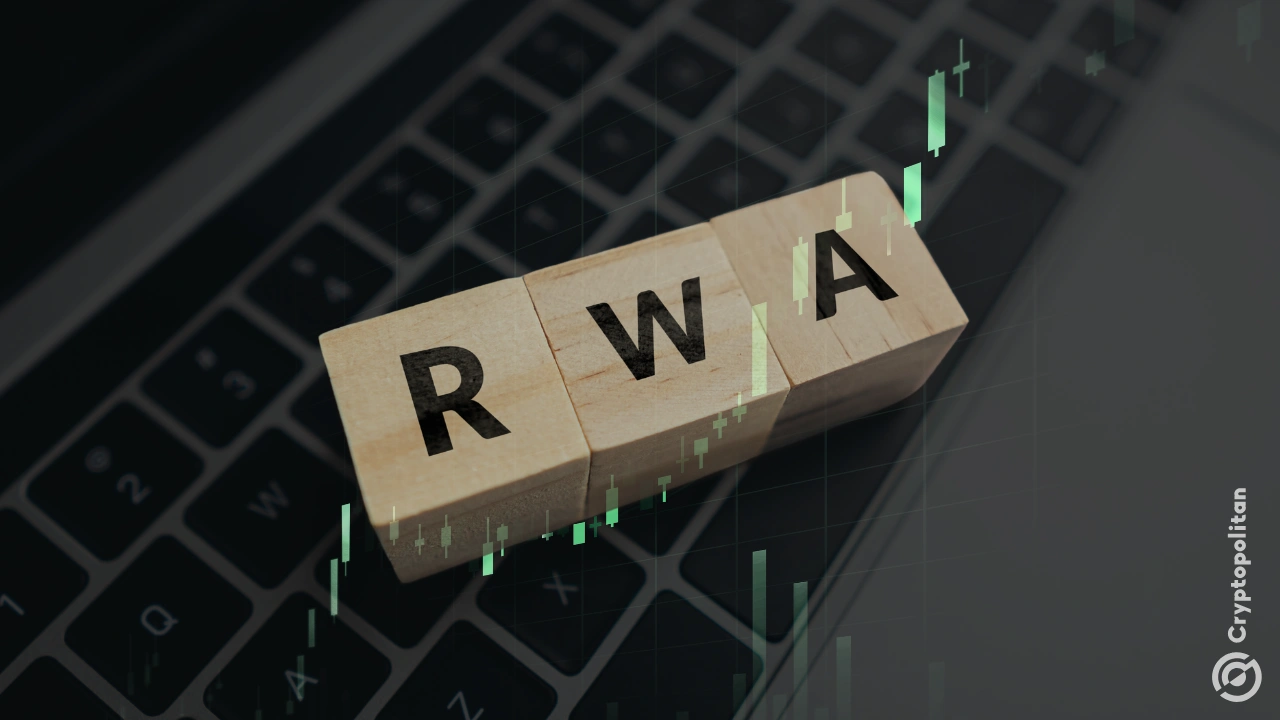
Per rwa.xyz, roughly $25B in tokenized real-world assets (RWA) were under management as of May 2026. In January 2024, that value was $8B. The market is projected to grow, backed by institutional leaders such as BlackRock and Franklin Templeton.
The important question for a self-directed crypto investor is no longer “are RWAs real?” — it’s “where do I actually buy one, and what am I trading off in the process?” This guide compares the five platforms worth shortlisting in 2026, splits the field between issuance and secondary-market access, and shows which platform fits which use case.
Quick Glance Summary Table
| Platform | Category | Asset categories | Investor eligibility | Best for |
| ChangeNOW | Secondary market | Tokenized stocks, gold-backed tokens (XAUT, PAXG), ETFs | Simplified onboarding and frictionless crypto-to-crypto swapping | Retail crypto holders wanting self-custody RWA exposure without issuer onboarding |
| Ondo Finance | Primary issuance | Tokenized US Treasuries (OUSG, USDY), 100+ stocks & ETFs | Non-US users; OUSG institutional-only; US persons excluded | Non-US retail & HNW investors seeking on-chain T-bill yield |
| Backed Finance | Primary issuance | Tokenized US stocks & ETFs, short-duration treasuries | Non-US, non-UK; KYC required; min $5,000 | Non-US investors wanting regulated on-chain equity exposure |
| Centrifuge | Primary issuance | Private credit, real estate debt, US T-Bills, structured pools | Qualified/professional investors; eligibility set per pool | Investors seeking diversified credit yield beyond T-bills |
| Maple Finance | Primary issuance | Institutional credit, US Treasury exposure, syrupUSDC/syrupUSDT | Non-US accredited/qualified investors; KYC required | Non-US accredited investors wanting institutional lending yield |
What Is an RWA Token?
Real-World Assets (RWAs) are tangible assets that exist in the physical world. They can range from bonds to commodities, real estate properties, and machinery. In the blockchain context, RWA tokens are digital tokens that represent physical and traditional financial assets. This includes currencies, commodities, equities, and bonds. The tokenization of RWAs is seen as one of the largest market opportunities in the blockchain industry, with a market potential of hundreds of trillions of dollars.
Types of RWA Tokens
Tokenized treasuries and money-market funds: These are funds that provide on-chain access to low-risk, yield-bearing government debt and cash-equivalent assets. Examples: BUIDL, FOBXX, USDY, OUSG, USDM.
Tokenized private credit: These are decentralized lending pools that package private loans into tradable tokens. Examples: Maple, Centrifuge pools, Goldfinch.
Tokenized real estate: RWA tokens that provide fractional property ownership made liquid and globally accessible via blockchain. Examples: RealT, Lofty, Tangible.
Tokenized commodities: These are digital claims to physical assets such as gold, oil, or industrial metals. Examples: PAXG, XAUT, tokenized oil/copper.
Tokenized equities and other securities: Equity shares and structured financial products issued as blockchain tokens. Examples: Backed bIB01, bCSPX, Securitize-issued equity tokens.
Primary Issuance vs Secondary-Market Access
Buying RWA tokens can mean two different things: primary issuance and secondary-market purchases.
Primary issuance involves subscribing to RWA tokens directly from the issuer. The issuer is a regulated entity with the capability and infrastructure to back up RWA tokens with real-world value; these can be private credit, real estate, commodities, or treasuries. The issuer is also responsible for redeeming the RWA tokens for their underlying assets.
Secondary markets provide a privacy-enhanced access to RWA tokens. These markets are non-custodial and aggregate RWA liquidity from different sources. The markets let you swap your crypto for these assets. Some RWAs are permissioned and only settle to addresses on the allowlist; others are freely transferable.
The market you choose depends on whether you can pass the issuer’s eligibility checks or prefer the open liquidity of secondary swaps.
What to Look For in an RWA Token Platform
Accessibility and investor eligibility
Primary issuance platforms will only provide their services to accredited investors or institutions. The same applies to redemption services. The platforms require strict Know-Your-Customer (KYC) requirements, as the underlying asset is considered a security in many jurisdictions. They also restrict access to some jurisdictions, such as the US and Russia.
Secondary market swaps are non-custodial and impose no eligibility requirements. Traders can trade at will; some assets may still require allowlisting by the issuing platform. Non-ustodial swap platforms require only wallet access to use their services.
Jurisdiction availability
Primary-issuance and redemption platforms typically exclude US persons, EU persons, or both on specific products. They also expect users to check with local regulators to see whether they can use the products. In secondary markets, access is broader because liquidity is available through decentralized contracts.
Asset breadth across issuers
An issuance platform will collaborate with market makers and custody platforms to tokenize traditional financial assets. They sell and redeem their own products. A secondary market will aggregate liquidity from centralized and decentralized exchanges to list RWA tokens from different issuers. This matters to a buyer who wants to compare or hold across issuers without having to onboard to each one separately.
Operating history and trust signals
You need to check the platform’s performance metrics and operating history. Look at the numbers: total assets under management (AUM), total value locked (TVL), user count, and review ratings on third-party platforms like Trustpilot. These values help you gauge a platform’s reliability and market position.
Custody model
After purchase or issuance, RWA tokens settle on-chain. Centralized providers may hold your assets in third-party custody accounts until redemption, at which point payments are sent to your wallet. Non-custodial swap settles directly to the user’s wallet.
Issuer reputation and counterparty risk
Who actually holds the underlying T-bill, loan, or property? BlackRock or BNY Mellon will have a different risk profile compared to a lesser-known issuer. Counterparty risk arises when the value of an asset you hold is backed by another held by a counterparty.
Audit, attestation, and redemption mechanics
Audits give you an in-depth analysis of a platform by a third-party professional. Audits help determine and verify accuracy, evaluate performance, and ensure compliance with best practices.
Redemption mechanics determine how you are paid after redeeming your RWA. Some platforms will settle redemptions in stablecoins, while others provide the option to wire cash. Some assets have a redemption timeline.
The 5 Best Platforms to Buy RWA Tokens in 2026
The article must state plainly that ChangeNOW does NOT issue, originate, attest to, or custody RWA tokens. It provides a path to BUY tokens already issued by others.
That distinction belongs in the entry description and in section 12. The lead position reflects who the article is for — a retail crypto holder who wants to buy, not a claim that ChangeNOW is the right tool for every RWA need.
1. ChangeNOW (secondary-market access)
Name: ChangeNOW
URL: https://changenow.io/real-world-assets
Category: Secondary-market access — non-custodial swap service for existing on-chain RWA tokens
ChangeNOW is a crypto management platform with secondary market access to existing on-chain RWA tokens. ChangeNOW was established in 2017 and has over 1,500 listed cryptocurrencies across various asset classes. A user holding crypto can swap into an RWA token that already trades on-chain, with the proceeds settling to a wallet the user controls.
Key features:
- RWA is listed among the supported asset categories, alongside DeFi, stablecoins, AI coins, and others. (1,500 supported assets across 110+ blockchain networks)
- Secondary market: ChangeNOW does not issue, originate, attest to, or custody RWA tokens; it only provides a pathway to swap tokens issued by others.
- Simplified onboarding and non-custodial- connect and swap funds that settle directly in your wallet.
- Fixed-rate and floating-rate swap models
- Limit order functionality lets you dictate your sell or purchase price.
- 70+ fiat currencies via partner ramps (Transak, Simplex, Guardarian)
- Private transfers for confidential on-chain RWA transactions
Asset categories offered: Listed RWA assets include tokenized stocks such as Tesla and Nvidia, gold-backed assets such as XAUT and PAXG, and ETFs.
Custody model: Non-custodial. Trades settle directly on user wallets.
Investor eligibility/jurisdiction: Streamlined onboarding via non-custodial crypto-to-crypto flows.
Redemption mechanics: ChangeNOW does not redeem RWA tokens — it facilitates secondary-market swap into and out of them.
Fees: Spread baked into the quoted rate. Fixed-rate quotes carry a small premium for the rate lock—no setup or signup fees.
Pros:
- Simple onboarding, connect your wallet, select tokens, and swap.
- Streamlined Access: Features a frictionless onboarding flow for crypto-to-crypto swaps. This ensures broad accessibility for retail users, eliminating the need for complex accredited-investor verification steps.
- 4.5-star Trustpilot rating across 13,000+ user reviews
- RWA assets from multiple issuers under one roof, no separate onboarding.
- Broad chain coverage, 110+ blockchain networks.
- ChangeNOW claims an average swap time of 1 minute and a 98% success rate.
Cons:
- Secondary market: ChangeNOW does not offer facilities to originate or redeem RWA tokens.
- Availability depends on liquidity. Exotic routes are not available for most RWA tokens.
- Permissioned RWAs are available only to allowlisted wallets and cannot be acquired via an open-market swap.
- No yield management, attestation reporting, or coupon handling.
Best for: Retail crypto holders (ETH, USDC, BTC, etc.) who want exposure to an RWA token with on-chain liquidity, prefer not to (or cannot) go through an issuer’s onboarding process, and want self-custody settlement.
Entry 2: Ondo Finance
Name: Ondo Finance
Category: Primary issuance — tokenized US Treasuries and money-market funds
Ondo Finance designs and builds the infrastructure to bring traditional finance markets onto the blockchain. The platform has a total value locked (TVL) of $3.66B. To get started with Ondo, browse the available funds to learn their underlying mechanics, expected yields and risks, eligibility requirements, and much more. You can invest by connecting your wallet and depositing stablecoins (or, in some cases, wiring USD). The RWA tokens are redeemable for stablecoins (or USD)
Key features:
- OUSG token: offers exposure to short-term US Treasuries with 24/7 instant mints and redemptions.
- USDY: a yield-bearing permissionless stablecoin backed by US Treasuries, and it accrues yield daily, whether you’re staking, borrowing, pledging, or just holding it.
- 165 integrated projects
- Multi-chain availability: 12 supported chains, including Ethereum, Solana, Aptos, Sui, and Mantle.
- Ondo Global Markets for tokenized stocks and ETFs, Flux for borrowing and lending RWAs, and Nexus for instant liquidity for asset issuers.
Asset categories offered: 100+ tokenized stocks and ETFs via the Global Markets platform, including the stock of popular companies (e.g., Tesla, Nvidia, Figma), indexes (e.g., QQQ, SPY), and fixed income ETFs (e.g., TLT, TIP, AGG)
Custody model: Underlying assets custodied by a third-party qualified institutional custodians (Coinbase, StoneX, BNY). RWAs are self-custodied by the user once issued.
Investor eligibility/jurisdiction: Ondo prohibits business activities from certain jurisdictions in accordance with its security issuance requirements. Some of these include the United States, Myanmar, Russia, Canada, Syria, and Sudan. Some products, such as OUSG, are only available to institutional investors.
Redemption mechanics: The minimum you can redeem at Ondo markets is $1.00. Redemptions are made to USDon or USDC. Redemptions to USD via bank wire are not currently supported.
Fees: Fees at Ondo global markets are baked into the spread. Investors pay for gas.
Pros:
- Reportedly, the largest RWA platform by TVL, signaling product-market fit and audit cadence sufficient for serious treasury allocators.
- Multi-chain availability means a wider set of self-custody wallets can hold the tokens.
- USDY is among the more accessible yield-bearing tokenized treasury products for non-US users.
- Structured to provide strong investor protection – full asset backing, transparent holdings, independent audits by Spearbit and Cyfrin.
Cons:
- Eligibility restrictions exclude US retail. A US-based retail user generally cannot subscribe directly to OUSG, and USDY is unavailable to US persons.
- Some offerings (like OUSG, backed by BlackRock’s BUIDL fund) remain institutional-only.
- Self-custody works, but the wallet must be onboarded by Ondo first.
Best for: Non-US retail and HNW investors wanting direct on-chain US Treasury yield exposure via the highest-TVL issuer in the category.
Entry 3: Backed Finance
Name: Backed Finance
URL: https://backed.fi/
Category: Primary issuance — tokenized equities, ETFs, and short-duration treasuries
Backed Finance works with different service providers and protocols to bring US stocks and ETFs on-chain. The tokenized assets are available to a global audience 24/7, with cross-chain mobility and DeFi composability. They also offer collateralized lending services. The platform’s compliance regulatory framework is based on the Swiss DLT Act.
Key features:
- A proof-of-reserves mechanism for users to verify on-chain collateral reserves.
- 1:1 Backing with underlying collateral assets.
- Tokenized assets are redeemable for the cash value of the underlying assets.
- Multichain support, available on Ethereum, Solana, Mantle, TON, Ink, and other EVM-compatible networks.
Asset categories offered: Backed Finance offers tokenized US stocks and ETFs. Listed assets include SP500, NVIDIA, TSLA, NFLX,
Custody model: Underlying assets are held by regulated 3rd party custodians. Tokenized assets are self-custodied after issuance.
Investor eligibility/jurisdiction: Primary issuance restricted to non-US and UK persons. Tokens themselves may trade on secondary venues subject to the platform’s transfer-restriction rules.
Redemption mechanics: Only KYC and AML-verified users can redeem the underlying asset’s cash value.
Fees: Issuance/redemption fees + ongoing management fees passed through from the underlying ETF.
Pros
- RWAs can be used as collateral in lending markets, deployed in liquidity pools, and integrated into structured products.
- Broad coverage of US stocks and ETFs
- xStocks can be held and transferred in fractional amounts. xStocks are permissionless tokenized representations of publicly traded stocks and ETFs.
- Token balances always reflect a 1:1 exposure of the underlying equity.
Cons:
- Excludes US and UK citizens from primary issuance.
- Only allowlisted addresses can issue or redeem assets on the primary market.
- Liquidity on secondary venues varies sharply by product; less-traded tokens can have thin pools.
- For direct interactions with the issuer for issuance or redemption, the minimum transaction size is $5,000.
Best for: Non-US investors seeking on-chain exposure to US equity markets and S&P/Nasdaq ETFs, with a clearer, regulated legal wrapper than most issuers offer.
Entry 4: Centrifuge
Name: Centrifuge
Category: Primary issuance — tokenized private credit and structured pools
Centrifuge is a product for asset managers and investors. The platform provides the infrastructure for asset tokenization with automation, multi-chain reach, and DeFi composability. For investors, Centrifuge provides exposure to institutional RWA across treasuries and credit, index products, and structured vehicles. Centrifuge connects tokenized assets to DeFi liquidity, for transparent yield and diversified access.
Key features:
- Self-serve and white-glove asset tokenization and management services
- Decentralized, objective credit risk reporting and analysis for assets and portfolios.
- A diverse portfolio of assets, including US Treasury Bills, asset-backed securities, Real Estate, and more
- Multi-chain pool deployment under Centrifuge V3
Asset categories offered: Tokenized private credit (invoice finance, real estate debt, consumer credit, trade finance), structured pools, US Treasury Bills, and real estate
Custody model: Underlying loans/assets held by issuer SPVs (special-purpose vehicles). Self-custody of the pool token after purchase.
Investor eligibility/jurisdiction: Generally restricted to qualified or professional investors, depending on the pool; some pools have broader eligibility. Centrifuge asserts eligibility criteria set per-pool by the issuer, not globally.
Redemption mechanics: Pool-dependent. Most pools settle redemptions periodically (weekly, monthly) tied to the underlying loan cash flows, not on demand.
Fees: Per-pool management/origination fees; protocol-level fees on Centrifuge.
Pros:
- Real-time on-chain data on asset performance and holdings
- A broad spectrum of asset classes, such as treasuries, real estate, and private credit.
- Exposure to off-chain credit yield, not just T-bill duplication. Useful for portfolio diversification beyond rate exposure.
- Pool-level transparency (NAV, default rates, borrower disclosures) is among the strongest in the RWA category.
- Long operating history; one of the earliest functional RWA protocols.The
- DeFi-composable token model means pool tokens can be used elsewhere in DeFi, where supported.
Cons:
- Private-credit risk: defaults happen. Tokenization does not change underlying credit risk, and historical drawdowns have hit some pools.
- Liquidity is not on demand. Redemption windows tie to the underlying loan book.
- Eligibility varies per pool; some pools are closed to retail entirely.
Best for: Investors seeking on-chain exposure to private credit and trade finance, willing to accept periodic-redemption liquidity in exchange for higher yield than tokenized treasuries.
Entry 5: Maple Finance
Name: Maple Finance
Category: Primary issuance — institutional lending and tokenized credit
Maple Finance moves institutional-grade lending and yield strategies on-chain. They run lending pools where verified lenders deposit stablecoins, professional pool delegates underwrite loans to vetted institutional borrowers, and depositors receive yield from interest payments. At press time, Maple had $3.65B in assets under management (AUM) and $21.97B in originated loans.
Key features:
- Backed by industry leaders Circle, Spartan, Framework, Castle Island Ventures, Veris Ventures, Blocktower, and Tioga Capital.
- Institutional lending pools with verified borrower underwriting
- Syrup token, the native governance token of Maple Finance, is used for key voting decisions.
- Multi-chain availability
- syrupUSDC & syrupUSDT are ERC-4626 vaults that generate yields primarily from overcollateralized institutional loans and other yield strategies.
Asset categories offered: Tokenized institutional credit, tokenized US Treasury exposure (Cash Management), syrupUSDC, and similar yield-bearing tokens.
Custody model: Lender capital pooled on-chain; loans extended to off-chain institutional borrowers under loan agreements.
Investor eligibility/jurisdiction: Lender pools restricted to non-US, accredited, or qualified investors with permissioned access.
Redemption mechanics: Borrowers can repay principal when a loan is called. Partial
repayments lower your LTV (loan-to-value ratio) and can cure a margin call.
Fees: Origination fees paid by borrowers for loan funding and refinance operations. Service fee paid by borrowers during loan repayments—management fees taken as a portion of gross interest paid by Borrowers when payments are made.
Pros:
- 25% of platform revenue used to buy back the Syrup token- deflationary tokenomics.
- syrupUSDC and syrupUSDT provide a consistent high yield available to everyone in DeFi
- Easy earn, lenders deposit into a pool to earn interest denominated in the pool’s liquidity asset.
- Offers institutional borrowers access to secured, overcollateralized credit facilities backed by digital assets.
- Overcollateralization of loans to prevent default risk.
- On-chain settlement with off-chain enforceable loan documentation — a hybrid that matters if a borrower defaults
Cons:
- Lenders must complete KYC for their wallets to be added to Maple’s Global Allowlist.
- Maple has had borrower defaults that crystallized losses for some lenders.
- Eligibility excludes retail US users.
Best for: Non-US accredited investors comfortable with credit risk, wanting institutional-grade on-chain lending yield as a complement to tokenized treasury holdings.
How to Choose an RWA Platform by Use Case
Yield-seeking treasury exposure (parking stablecoins for T-bill yield)
Can go for Ondo USDY/OUSG, BUIDL via Securitize or Backed by IB01. Users who can’t access primary issuance can opt for secondary-market access via a swap service like ChangeNOW.
Real estate fractional exposure
Pick RealT and Tangible. RealT allows global investors to buy and own fractional shares of real estate.
Private credit / on-chain yield from real-world borrowers
Centrifuge pools and Maple lending pools. Maple Finance specializes in moving institutional-grade lending and yield strategies on-chain.
Tokenized equities or commodities
Go for Backed (bCSPX, bIB01) or PAXG/XAUT for gold.
Risks and Regulatory Considerations
Issuer/counterparty risk: Your RWA token represents the underlying asset that the issuer holds in custody. Therefore, an RWA token is only as solvent as the entity holding the off-chain asset.
Smart-contract risk on the on-chain wrapper. Any flaw in the contract logic can lead to security incidents or hacks.
Custodian risk for the underlying asset. The RWA is held in collaboration with third-party custodians. In the case of solvency issues, the impact reverberates down to RWA token holders.
Regulatory ambiguity: tokenized securities are subject to securities law in most jurisdictions; as a result, they are subject to strict eligibility requirements and transfer restrictions.
“On-chain” does not mean “off-balance-sheet”. Tokenization changes the rail, not the underlying credit/legal claim.
Tax treatment varies by jurisdiction. Consulting with a tax professional about the real implications of holding on to RWA tokens.
![Ripple [XRP] News Roundup: $2 Billion Whale Buy Meets a Make-Or-Break Resistance Wall](https://image.coinpedia.org/wp-content/uploads/2026/07/24163919/XRP-Price-Analysis-and-News-ETFs-RLUSD-and-Supply-Full-Bull-and-Bear-Case-Explained-1-1024x536.webp)





 English (US)