
 3 months ago
11992
3 months ago
11992

Electric vehicle maker Tesla intends to revive work on Dojo3, its previously shelved third-generation artificial intelligence chip, company chief Elon Musk announced this past weekend.
The renewed effort marks a sharp turn from the chip’s original purpose, with Musk stating the technology will now support “space-based AI compute” rather than training self-driving systems.
The announcement comes five months after Tesla essentially ended its Dojo program. The company dissolved the team responsible for its Dojo supercomputer when project leader Peter Bannon left the firm. Around 20 additional Dojo employees later joined DensityAI, a newly formed AI infrastructure company created by former Dojo director Ganesh Venkataramanan along with ex-Tesla workers Bill Chang and Ben Floering.
Musk’s recent statements indicate another change in direction. Rather than expanding its partnerships with other chipmakers, Nvidia and AMD, for computing power and Samsung for semiconductor production, the company is scrapping plans to create its own silicon.
AI5 chip progress drives decision
The executive and major Republican political contributor explained on social media platform X that the choice to restart Dojo stemmed from progress on the company’s internal chip development timeline, noting that Tesla’s AI5 chip design was “in good shape.”
TSMC makes Tesla’s AI5 chip, which was created to run the company’s automated driving features and Optimus humanoid robot systems. Last summer saw Tesla finalize a $16.5 billion agreement with Samsung to produce its AI6 chips, intended to power Tesla vehicles and Optimus while also handling advanced AI training inside data centers.
“AI7/Dojo3 will be for space-based AI compute,” Musk wrote Sunday, describing the revived project as more of a moonshot.
Tesla now faces the task of rebuilding the workforce it disbanded just months earlier. Musk used his social media post to directly recruit engineers, instructing interested candidates to send messages to AI_chips@Tesla.com with “3 bullet points on the toughest technical problems you’ve solved,” noting these would become “the highest volume chips in the world.”
The timing lines up with Nvidia’s CES 2026 presentation of Alpamayo, an open source AI system for self-driving vehicles that competes directly with Tesla’s FSD software. Musk acknowledged on X that addressing unusual driving scenarios is “super hard,” adding “I honestly hope they succeed.”
Industry leaders eye off-planet data centers
Musk and other AI industry leaders have suggested future data centers might need to operate off-planet, pointing to strained power grids on Earth. Axios reported that OpenAI leader Sam Altman, a Musk rival, has also expressed interest in orbital data centers. Musk holds an edge since SpaceX gives him access to launch capabilities.
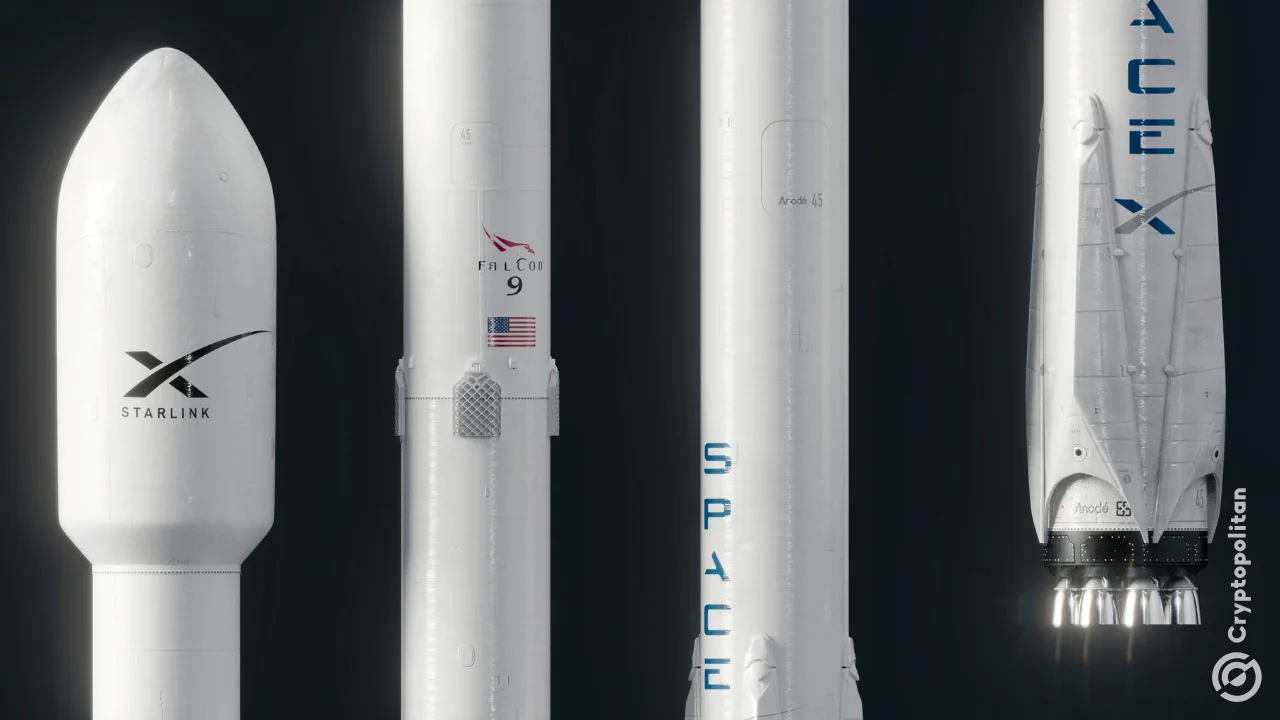
As reported by Cryptopolitan previously Musk plans to use SpaceX’s upcoming IPO to help finance his vision of using Starship to launch a constellation of compute satellites that can operate in constant sunlight, harvesting solar power 24/7.
If you're reading this, you’re already ahead. Stay there with our newsletter.










 English (US)