
 2 months ago
11637
2 months ago
11637

U.S. Treasury Secretary Scott Bessent said China is expected to press Iran privately to get the Strait of Hormuz open again, because Beijing is sitting right in the middle of the oil problem.
Scott said on Thursday that China has more at stake than the United States because it buys a huge amount of crude from the Middle East and gets nearly all of Iran’s exported oil. He told Joe Kernen, “It’s very much in their interest to get the strait reopened.”
Scott then added, “I think they will be working behind the scenes to the extent anyone has any say over the Iranian leadership.”
China is the world’s biggest crude oil importer. In the year 2024, roughly 10% of its crude oil imports were from Iran, while over 50% of all imports were from the Middle East, according to the U.S. Energy Information Administration.
As Scott pointed out, almost every barrel Iran exports to other countries ends up in China. Therefore, the closure is not simply a logistical issue; it is a matter of Chinese supply lines being disrupted. “China has a bigger interest in reopening that strait,” Scott said.
China needs Hormuz open because Iran’s crude trade is getting trapped
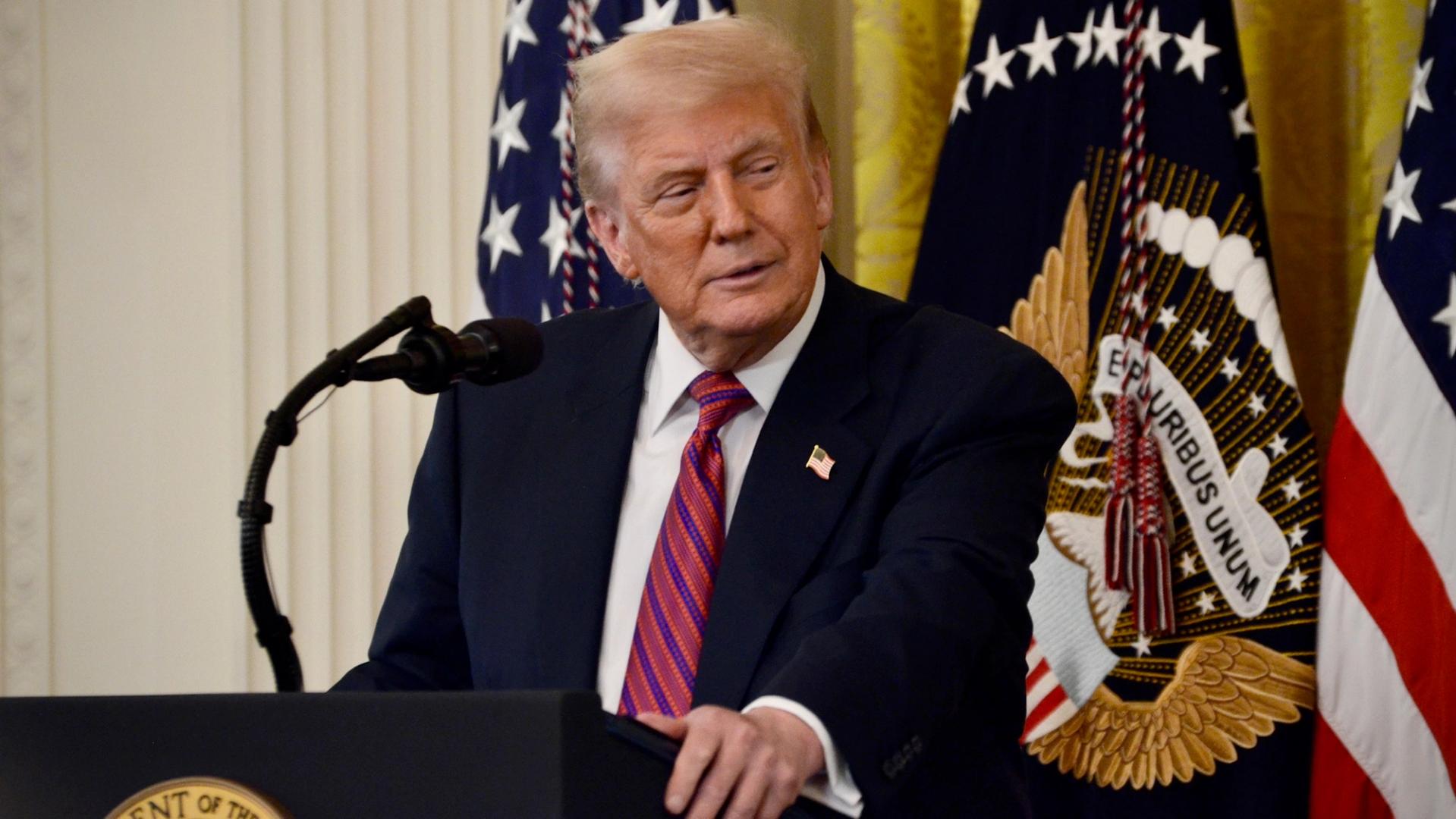
Donald Trump met President Xi Jinping during a two-day summit in Beijing on Thursday, where the Strait of Hormuz became one of the main energy issues on the table.
A White House official allegedly said Trump and Xi agreed the route has to stay open so energy can keep flowing through global markets, but Xi vehemently opposed the militarization of the strait and did not support any attempt to make ships pay a toll to pass through it.
Scott said Iran is already running into a storage problem because ships are stuck on both sides. He said, “None of the ships are getting out, none are coming in, so they’re not able to store oil on the water.” Scott added, “They’re going to start shutting down the production. We can see that’s happening from satellite photos.”
That is the brutal part of the oil chain. If tankers cannot load and floating storage is not available, production has to slow down. Iran then faces pressure from both ends. It cannot ship normally, and it cannot keep pumping at the same pace forever. China also has a problem because its Iranian supply line is tied to a route that is now under stress.
Scott said China is already looking at more U.S. energy because of the disruption in the Middle East. He said other countries are also trying to find a more stable supply. The U.S. is planning to increase oil and liquefied natural gas exports from Alaska, which Scott described as a logical supply point for China because it is closer than other U.S. export routes.
Scott told reporters, “We think that not only China, but countries all around the world are going to look to diversify away from the Middle East for more stable sources of energy, and what better place than the U.S.”
U.S. and China set AI rules while Nvidia chip access hangs over talks
The Beijing summit also covered artificial intelligence. U.S. and Chinese officials are discussing guardrails for advanced AI models. They are also planning a protocol for best practices so criminal groups, terrorist groups, and other non-state actors do not exploit the strongest systems.
Scott said that it was “of utmost importance” for the U.S. to keep its AI lead over China. He said Beijing wants to discuss guardrails because the technology is getting more powerful and harder to control.
Scott added, “What we don’t want to do is stifle innovation. So our responsibility is to come up with the highest performance calculus where we can get the most innovation and the highest level of safety.”
The AI talks are happening after Anthropic’s Mythos AI exposed major software security flaws. Banks and other companies then had to rush repairs and software upgrades to fix weak points in their networks. U.S. officials are worried that bad actors could use Mythos to attack markets or disrupt the global financial system.
Meanwhile, Scott said he had no knowledge of those rumored Nvidia H200 approvals. He also said that kind of decision belongs to the U.S. Commerce Department, not Treasury.
Don’t just read crypto news. Understand it. Subscribe to our newsletter. It's free.










 English (US)