
 3 months ago
13824
3 months ago
13824

Weeks after imposing anti-dumping duties on Chinese and Japanese robots, South Korea is looking to create “mega special zones” to boost developments in robotics and other key sectors.
The government, under President Lee Jae-myung, announced plans to establish exactly four mega special zones, focusing on robotics, renewable energy, biotechnology, and autonomous driving, The Chosun Daily reported Thursday. These zones will receive support in key areas, including financial, talent, infrastructure, and taxation.
President Lee said the move is crucial to secure Korea’s global competitiveness as a trading nation. From the meeting held on Thursday, the administration wants these zones established quickly.
Korean gov’t pushes for negative regulations again
The government wants to enact the “Mega Special Zone Special Act” this year, with the “highest level of regulatory exceptions.” According to reports, the President Lee administration plans to get all the ministries involved to shorten the administrative period in processing the Act. They also deliberated on the idea of having a “czar” to oversee these mega zones.
The President is also all-out to waiving off regulatory hurdles that weaken Korea’s competitiveness in robotics and other sectors on the global stage.
In the meeting, he announced plans to adopt negative regulations for advanced industries, covering robotics. Under such a regulatory environment, Korean robotics companies and other industries covered will be permitted to engage in any activity provided it’s not explicitly prohibited by existing laws. This is more like saying don’t wait for permission, act now.
“When public officials set rules saying, ‘just do this,’ the field must change regulations, obtain permits, and in the process, we lose competitiveness,” the President said.
Notably, there have been previous efforts by past administrations to introduce a similar regulatory approach. But it faced opposition and inter-ministerial conflicts. The present administration bets it will be a different case, with President Lee acting as the “regulatory control tower.”
“If the committee concludes that a reform is necessary but a ministry claims it’s impossible, report it to Cheong Wa Dae. I will resolve it,” the President said during the meeting.
A boon for Korea’s robotics industry
The reform could spell a boon for the Korean robotics industry, which has since sought regulatory polices to tackle the flood of low-cost robots from China and Japan affecting local firms.
Last year, HD Hyundai Robotics and four other Korean companies filed anti-dumping complaints, accusing Japanese and Chinese suppliers of products nearly 60% cheaper than locally-made ones, making it unfair for local suppliers to compete.
In respect to the complaints, Korea Trade Commission (KTC) imposed antidumping duties as much as 15.96-19.85% on Chinese robots and 17.45-18.64% on Japanese robots, Cryptopolitan reported on March 26th, 2026.
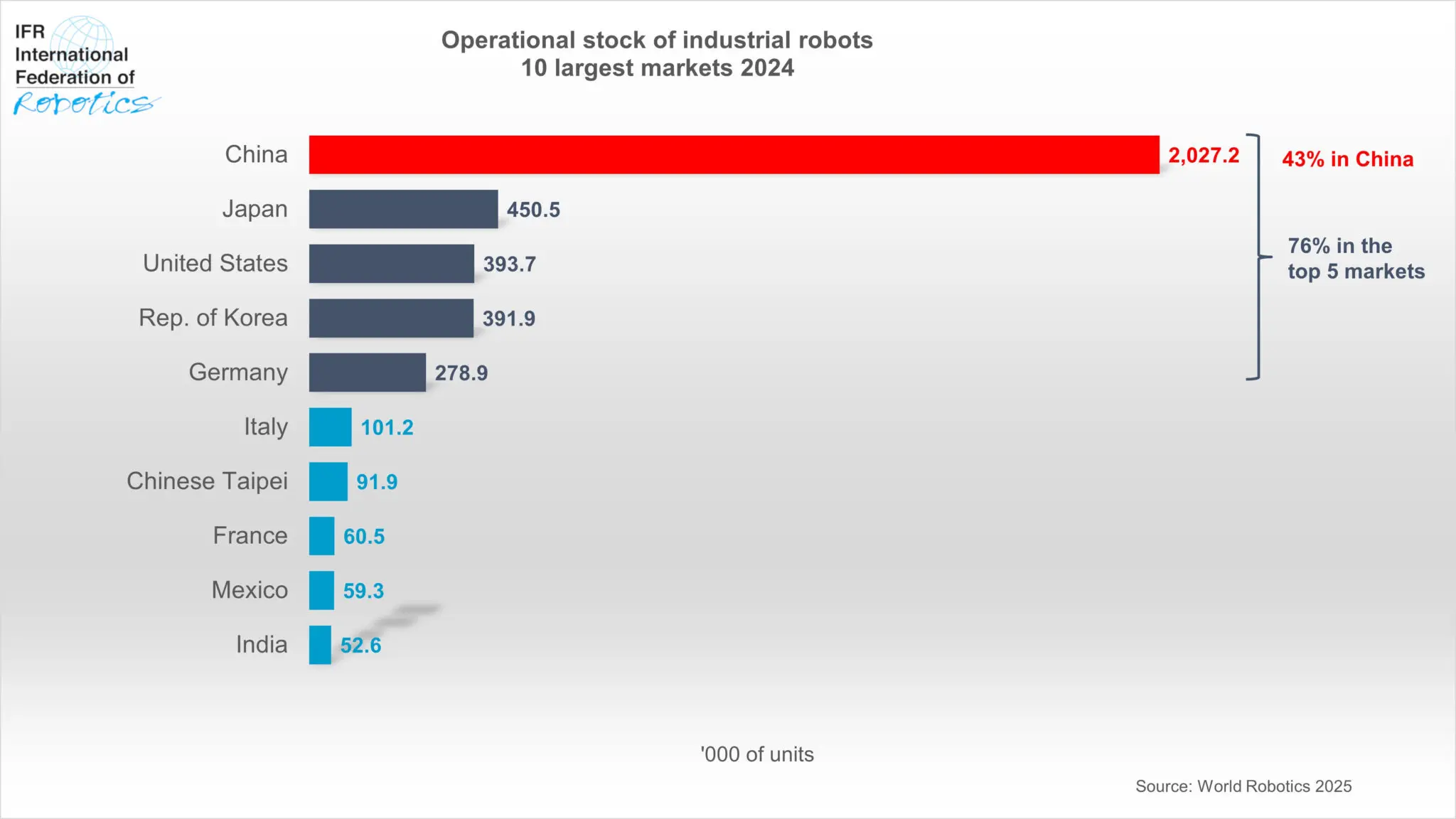 South Korea follows China, Japan, and the US as the largest markets for industrial robots. Source: International Federation of Robotics.
South Korea, meanwhile, is one of the largest markets in terms of operational stock of industrial robots. The country has 391,900 operational units, the fourth-largest, led by China, Japan, and the United States.
If you're reading this, you’re already ahead. Stay there with our newsletter.














 English (US)