
 2 hours ago
1276
2 hours ago
1276
.png)
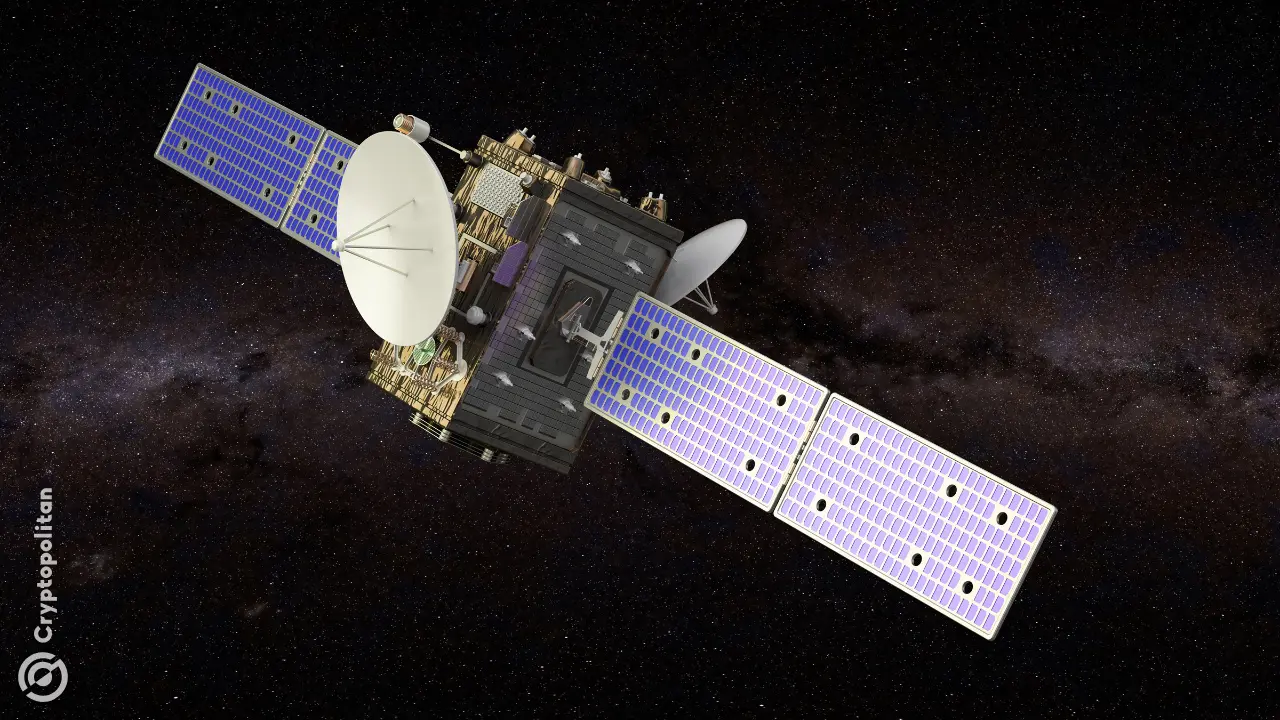
Google has announced that it will send a satellite carrying its own AI processors into low Earth orbit on October 1.
The launch is in order to test whether the chips can survive in space and puts Google’s Project Suncatcher program ahead of rivals like Elon Musk’s SpaceX.
Can Google’s AI chips survive in space?
Google has announced that it will launch a satellite carrying its Tensor Processing Units, the custom chips it uses to run AI workloads, into low Earth orbit. The satellite will reportedly fly aboard a SpaceX Falcon 9 as part of the Transporter-18 rideshare mission.
A trip to low Earth orbit lasts about 10 minutes, and individual components can face forces of 50 to 100 times gravity along the way. Google’s test will give it data on how the TPUs cope in orbit and with the vibration and acceleration of launch and the radiation and heat swings of space.
The company said it already mimicked a launch by shaking a satellite on all three axes. The TPUs involved in that test were also put through a proton beam, and they survived.
Project Suncatcher is a research effort Google announced in November 2025, aimed at eventually putting solar-powered AI data centers in orbit. Google says that satellites see near-constant sunlight in low Earth orbit and can generate up to eight times more solar energy than panels on the ground.
Travis Beals, the senior director leading the program, has reportedly stated that the chips can run for only about 15 minutes before they need to shut off and cool down. Google is testing an orbital cooling setup built around heat pipes and radiators to solve that issue.
Google plans to put two more satellites in orbit in 2027.
What are Google’s rivals, SpaceX and Blue Origin, up to?
Elon Musk announced in February that he would merge SpaceX and xAI in a deal valued at $1.25 trillion, arguing that “space-based AI is obviously the only way to scale.”
However, Cryptopolitan reported in February that SpaceX has since asked the Federal Communications Commission (FCC) to approve its plan to launch up to 1 million data-center satellites to train xAI models.
Jeff Bezos’ company Blue Origin has also asked the FCC for permission to deploy close to 52,000 solar-powered satellites for AI computing, following applications from SpaceX and the startup Starcloud.
Former Google CEO Eric Schmidt has also entered the field, buying the launch firm Relativity Space.
The shared logic is that AI’s appetite for electricity is outgrowing what’s available. Schmidt told a House committee that data centers could need 29 more gigawatts of power than they do now by 2027.
Google also suggested in an analysis published alongside its 2025 announcement that running a data center in orbit could become roughly comparable in cost to running one on Earth by the mid-2030s.
If you're reading this, you’re already ahead. Stay there with our newsletter.

















 English (US)