
 3 months ago
11496
3 months ago
11496
.png)
The two largest tech companies in IPOs will battle for first place in what might become the biggest ever public listings on Wall Street as OpenAI and Anthropic each attempt IPOs at an eye-watering $1 trillion valuation.
The combined three IPOs will be the first to raise over $195 billion from institutions in such close succession, a flood of funding demand that could draw flows away from other deals and test the capacity of world markets to digest consecutive multitrillion-dollar listings, Reuters reports.
Goldman Sachs and Morgan Stanley have both been confirmed by Fortune as key bookrunners on the two mega-IPOs by the world’s two largest AI companies. Which bank ends up getting the prized “lead left” on each deal is the unanswered question, and a matter of considerable revenue gain for either party.
AI Giants Seek Trillion-Dollar Valuations
According to reports, Jay Ritter, a professor of finance at the University of Florida and a top IPO researcher, explains that the lead underwriter chooses where the stock is allocated between institutional investors. As a consequence, “soft dollars” come into play; these are extra fees charged above execution costs to keep the money flowing in after a big allocation.
Goldman had already secured the lead underwriter position in SpaceX’s $75 billion stock issuance, set to take place on June 12th. The bank has recorded an 18% increase in sales and trading revenue from last year, hitting a record $41.5 billion, per Fortune. Morgan Stanley saw a 17% growth in the same area, bringing its total up to $33.1 billion. Ritter believes that both Goldman Sachs and Morgan Stanley will continue their strong trading revenue performance as money flows into both as soft dollars due to the coming AI companies’ initial public offerings.
The global IPO market is currently running above capacity, with IPOs reaching around $87.5 billion by late May 2026, per Reuters, the highest level since 2021. In such an environment, the sudden emergence of a cluster of ultra-large offerings poses the risk of capital markets suffering a temporary absorption constraint if multiple mega-offerings emerge one after another.
In this respect, this question becomes especially relevant, considering the scale of the forthcoming IPOs. A combined offering from SpaceX, OpenAI, and Anthropic is estimated by the market to be around $150 billion to $195 billion based on deal sizing and time to market. In the eventuality of a successful execution, this scale will create a several-fold expansion in the IPO supply compared to year-to-date figures, which may cause investors’ capital flow to shift out of mid- and small-cap offerings.
In this sense, the relative scale of each individual offering makes clear the degree of the capital-raising needs associated with this liquidity event. For instance, SpaceX is set to be the first company to debut publicly with an estimated valuation of around $200-$250 billion, having raised about $75 billion or more, creating one of the most ambitious IPOs ever attempted. OpenAI is seen as pursuing a goal of obtaining a similar amount to SpaceX, with its valuation being somewhere between $900 billion and $1 trillion.
In addition to that, Anthropic is also reportedly seeking a valuation of several hundred billion dollars, estimated between $300-$500 billion.
OpenAI IPO may drain capital from rivals
Overall, the three listings not only constitute an unusually large issuance pack but also present a sequencing challenge for both underwriters and investors. Timing differences between the issues may affect the pricing dynamics, since liquidity drained from previous deals may negatively affect demand for following ones, especially when volatility goes up, or there is an increase in secondary issuance by big players in the tech market sector.
In addition, fees make the whole process even more important. For instance, assuming that typical fees for a mega-IPO range around 0.75% to 1%, the overall underwriting revenues from the three deals might amount to hundreds of millions of dollars, excluding additional trading revenue streams.
The total amount of capital these issues need has created a potential problem known as crowding. According to Gil Luria, the managing director at D.A. Davidson, OpenAI may drain the capital needed to go public by the time the company starts its IPO. Both SpaceX and Anthropic are in line, and big competitors in the public market have enough liquidity to raise tens of billions with secondary issuance, as was demonstrated by Google recently.
The fear is not imaginary. Global IPOs have raised $87.5 billion till late May 2026, the fastest pace since 2021, reported Reuters. With just three deals worth $195 billion within a short period, the total would be more than tripled.
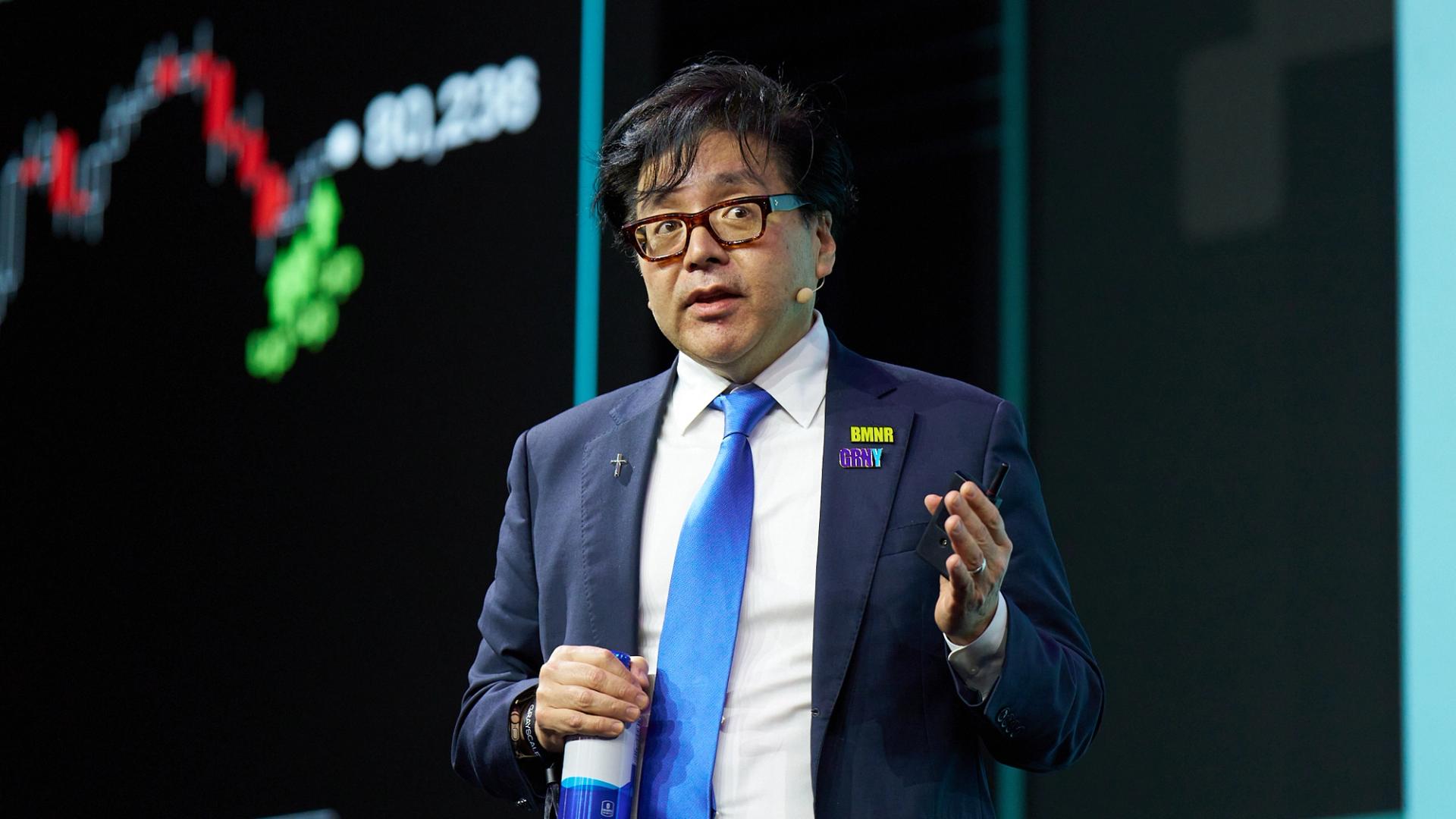
Ted Pick, CEO of Morgan Stanley, sounded positive about the securities business during the company’s conference held on June 9, saying that “it is really humming right now,” as per Reuters. The firm’s investment banking revenues have soared by 36% in the first quarter due to its advisory activities. Equity revenues have hit record highs on the back of volatility caused by the conflict in Iran.
If you're reading this, you’re already ahead. Stay there with our newsletter.

![Ripple [XRP] News Roundup: $2 Billion Whale Buy Meets a Make-Or-Break Resistance Wall](https://image.coinpedia.org/wp-content/uploads/2026/07/24163919/XRP-Price-Analysis-and-News-ETFs-RLUSD-and-Supply-Full-Bull-and-Bear-Case-Explained-1-1024x536.webp)









 English (US)