
 3 months ago
11894
3 months ago
11894
.png)
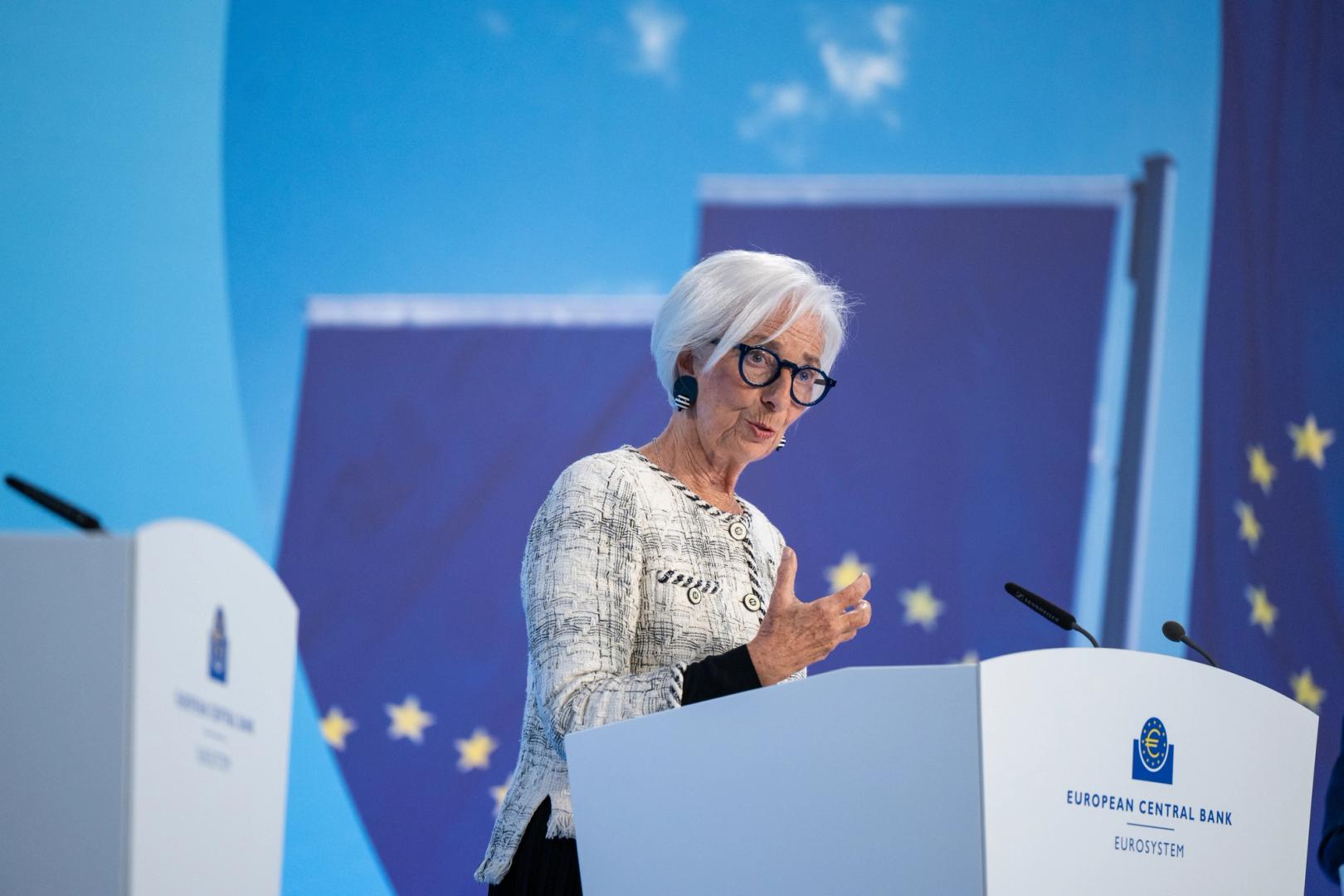
A member of the European Central Bank’s Executive Board, Isabel Schnabel, recently argued that stablecoins threaten financial stability and monetary sovereignty.
Schnabel echoed the central opinion of the European Central Bank, arguing that central bank digital currencies (CBDCs) are the proper foundation for Europe’s monetary system.
Why are stablecoins considered to be so risky?
During a keynote at the Bank of Korea’s international conference in Seoul, a European Central Bank (ECB) Executive Board member, Isabel Schnabel, compared today’s stablecoins and the money market funds that disrupted banking in the 1970s.
The ECB has long held a position against privately issued digital currencies and repeatedly stated that only a sovereign CBDC can serve as a credible monetary anchor.
Schnabel’s comparison between stablecoins and money market funds (MMFs) was based on structural similarities. MMFs attracted deposits away from banks by investing in short-term government bonds, commercial paper, and repurchase agreements and similarly, stablecoins promise one-to-one redemption against fiat currencies while holding reserve assets like treasuries, repos, and bank deposits.
Schnabel explained that because the overwhelming majority of stablecoins worldwide are pegged to the US dollar, their spread could reinforce American monetary influence at the expense of other currencies. This dynamic could erode monetary sovereignty for emerging economies entirely.
The global stablecoin market is worth roughly $320 billion. Tether’s USDT accounts for $188 billion of that total, while Circle’s USDC covers about $75.8 billion. Cryptopolitan previously reported that Circle’s euro-denominated EURC trades at a fraction of those figures, with a supply of around $543 million.
Despite this, supply for euro-denominated stablecoins rose 48% over the past year, and the transaction volume for EURC surged over 1,100% following MiCA’s implementation.
Digital euro pilot delayed until 2027
The ECB’s solution is to offer a public alternative alongside private stablecoins, but the digital euro pilot itself is not expected to begin until the second half of 2027. It will run for 12 months, limited to a small number of banks and merchants. And regardless of the results of the pilot, the ECB does not expect to issue a digital euro until 2029 at the earliest.
Cryptopolitan previously reported that ten major European banks, including BNP Paribas, ING, and UniCredit, formed a consortium called Qivalis to launch a euro-backed stablecoin.
ECB President, Christine Lagarde, previously made a speech at the Banco de España LatAm Economic Forum in May, where she noted that even euro-denominated stablecoins carry risks for bank stability and monetary policy transmission.
The ECB has been consistent in its resistance to stablecoins even as other voices in European policy circles have pushed back. A report from Blockchain for Europe, co-authored by former ECB Director General Ulrich Bindseil, argued in April that the EU’s MiCA framework is too restrictive and risks pushing stablecoin business outside the bloc.
Rebecca Christie, writing for Intereconomics in a Bruegel analysis, argued that the EU cannot afford not to have a digital euro. She warned that a public void would invite private-sector alternatives that could become widespread, then collapse and threaten financial stability.
The smartest crypto minds already read our newsletter. Want in? Join them.














 English (US)