
 3 months ago
12685
3 months ago
12685
.png)
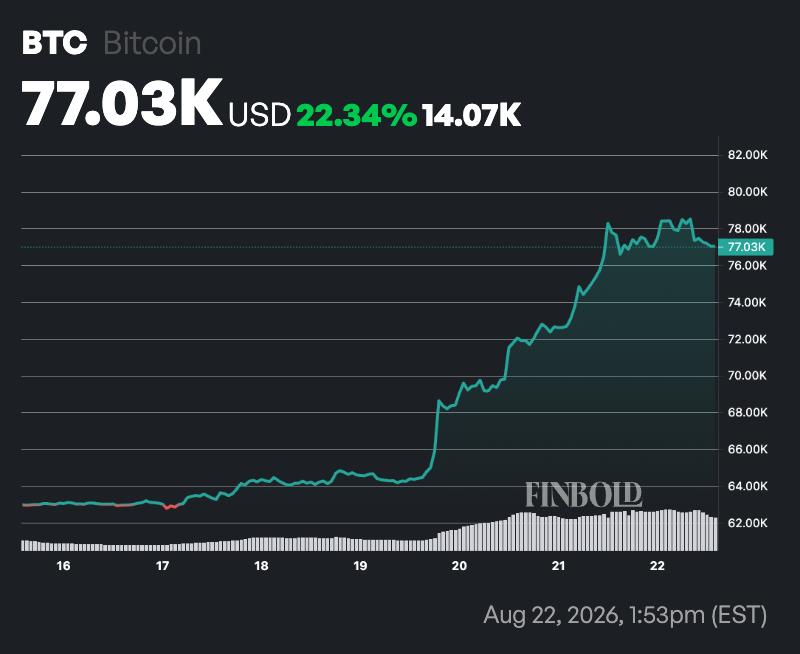
In a significant leap, Bitcoin reached $82,240 in the Asian markets, marking a peak in its recent price trends and stirring fresh sentiment among cryptocurrency enthusiasts. The uptick is largely attributed to surpassing the average costs of short-term holders, with current analytics hinting at $92,000 as the next tactical milestone for Bitcoin.
What Drives Short-Term Holder Impact?
Bitcoin’s resurgence has been primarily influenced by investors who have held the cryptocurrency for brief durations. Recent reports illustrate that the average acquisition price for these short-term holders is approximately $79,000. Historically, Bitcoin’s movement beyond this cost baseline usually instigates upward trends as holders transition from exiting strategies to increasing their portfolio shares now that they are in profitable territory.
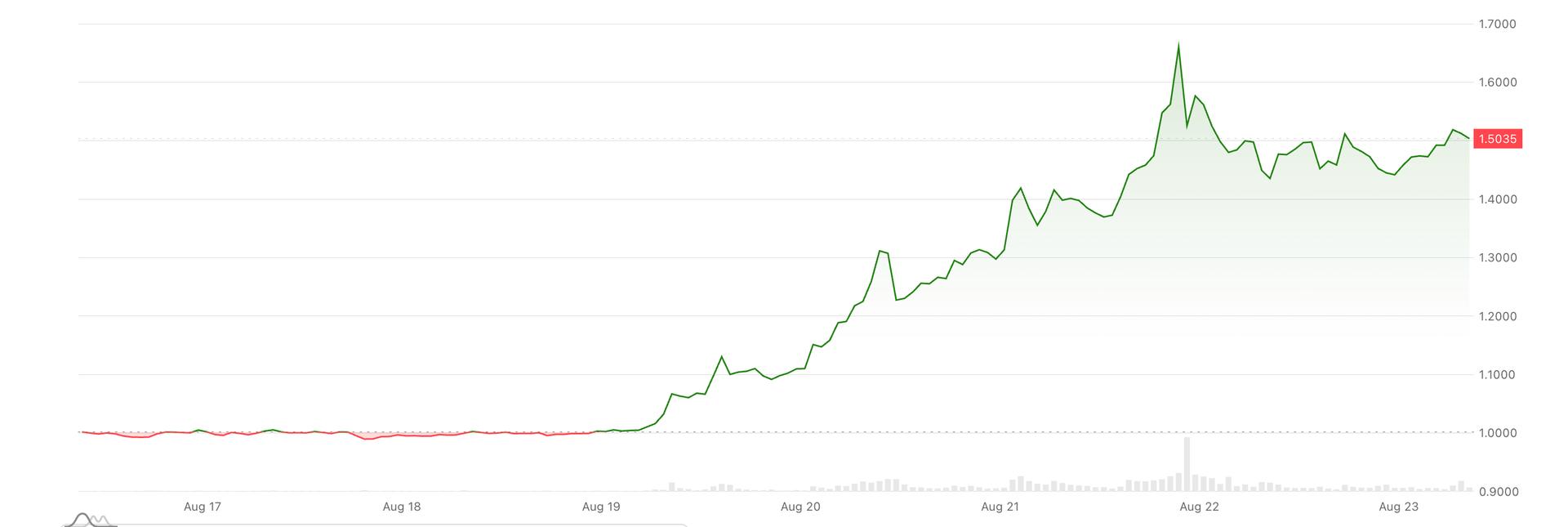
BitBull, a noted Bitcoin specialist, emphasized a shift, noting: “This level is back above 1, showing that recent buyers are now in profit and that selling pressure has weakened.”
Where are the Key Resistance Lines?
So far this year, BTC/USD has ascended by an impressive 37%, leaping from $60,000 to over $82,000. Market data highlights a similar upswing in April 2025, where Bitcoin’s value surged by 30% in just one month, nearly reaching $112,000. Observers also remark that previous significant increases in October 2024, October 2023, and January 2023 paralleled the overcoming of major on-chain markers.
The next pivotal resistance area is around $84,000. If Bitcoin can solidify its position above this threshold, it may pave the path toward $90,000 and a potential swift test of $92,423. Current figures from major trading platforms show Bitcoin trading near $82,240.
Significantly, Bitcoin ended the week above both its 20-week moving average and a key level defined as the “real market average” at $78,300. Historically, these types of closures favor additional upward potential from the current standing.

What are the Views of Major Stakeholders on the Next Price Point?
Key market analysts emphasize the importance of breaching the $82,000–$84,000 range to enable further progress. The 200-day exponential moving average at $82,600 and the 200-day simple moving average at $83,402 emerge as critical short-term benchmarks. Michael van de Poppe, founder of MN Capital, describes the $84,000–$86,000 sector as the next obstacle, suggesting surpassing it could clear a route toward the 50-week moving average near $90,000.
Whale order books reveal a concentration of substantial sell orders between $82,000 and $84,000, indicating that if Bitcoin crosses these limits, a move toward $92,000 could be rapid.
Taking into account certain technical analytics, Bitcoin might already have established its long-term bottom, with projections targeting as high as $250,000 over the next twelve months.
The analyst, Plan C, noted that securing a stable position above current levels implies that the 50% dip from the all-time peak at $126,000 should be interpreted as a short-term correction, not a major trend reversal.
This evolving momentum underscores Bitcoin’s potential to continue its upward trajectory, provided it maintains strategic support levels while inching closer to its next key resistances.
Disclaimer: The information contained in this article does not constitute investment advice. Investors should be aware that cryptocurrencies carry high volatility and therefore risk, and should conduct their own research.









 English (US)