
 1 month ago
5506
1 month ago
5506

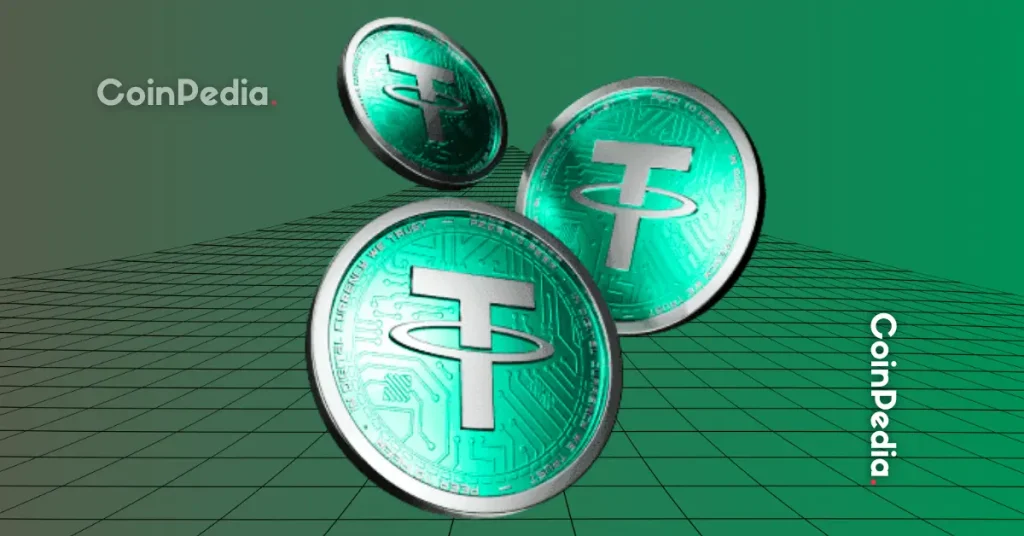
Tether CEO Paolo Ardoino has strongly criticized S&P Global and critics, dismissing the agency’s assessment as based on “outdated legacy models. He argued that the downgrade of the stablecoin’s rating was based on incomplete information and did not accurately reflect the company’s real financial strength.
Ardoino insisted that S&P had failed to fully take into account Tether’s assets, the volume of its profits, and the value of the wider group’s equity. These points further strengthen Tether’s case, he said, and demonstrate that USDt is backed by significantly more assets than critics would have assumed.
For numerous exchanges and users, USDt serves as a reliable workhorse for daily transactions. As a consequence, any perception of weakness can raise alarm bells, even if the fundamentals supporting it remain strong.
S&P downgrades USDT dollar-peg rating
On November 26, S&P downgraded USDT’s so-called “peg‑stability” rating from 4 (“constrained”) to 5 (“weak”) — the lowest level under its 1–5 scale introduced in 2023. The agency cited growing reserves in what it terms “high‑risk” assets: allocations to cryptocurrencies such as Bitcoin, precious metals, corporate bonds, secured loans, and other assets that introduce credit, market, interest‑rate, or foreign‑exchange risks.
The agency downgraded the dollar peg stability for USDt to its weakest level, its second downgrade since March. This decision took many in the industry by surprise, as USDt has proven itself capable of maintaining its peg during significant market swings over the years.
The downgrade quickly alarmed analysts, who said the rating could undermine confidence in a token that underpins billions of dollars’ worth of daily trading activity throughout the cryptocurrency market.
Ardoino disputed the report, saying it did not accurately represent Tether’s financial position. He said that Tether had, at the end of Q3 2025, approximately $7 billion in excess equity, in addition to the approximately $184.5 billion in stablecoin reserves, and an additional $23 billion in retained earnings as part of the Tether Group’s equity.
There was also roughly another $7 billion worth of reserves kept as a second buffer for USDt holders, but these were reserved in other forms, and they had “a different risk level”, Ardoino said.
Ardoino also claimed that S&P had swept Tether’s powerful revenue engine under the rug. From U.S. Treasury yields alone, Tether is taking in roughly $500 million a month, courtesy of its substantial holdings of government debt. The company’s income has grown as it has expanded and invested more of its reserves in short-term U.S. securities.
He contended that the rating company did not take into consideration the structure of the broader Tether Group. This conglomerate encompasses several revenue-generating divisions and substantial amounts of equity unrelated to stablecoin reserves.
Experts scrutinize Tether’s asset allocation and potential pitfalls
The downgrade had reignited old controversies about Tether’s reserves. Some analysts have wondered if Tether is too heavily reliant on non-traditional assets.
BitMEX creator Arthur Hayes hinted that Tether may be acquiring more gold and Bitcoin. He said these assets could also be employed to offset dwindling income on U.S. Treasuries in the context of falling interest rates.
If the prices of gold and Bitcoin were to decline precipitously, by, say, 30% or more, Tether’s equity could be wiped out, Hayes warned. He said that, in theory, such a situation could leave USDt vulnerable to insolvency.
But other experts dismissed the view. Joseph Ayoub, who was previously a top digital asset analyst at Citi, said he had analyzed Tether extensively and that the company is much stronger than many of its critics claim.
Ayoub stated that Tether’s reserves exceed its debt, much of which is unaccounted for in public summaries, and that the company has one of the most lucrative business models in finance. The firm, he said, generates billions in interest income with a staff of barely 150 people. Tether is better collateralized than the majority of traditional banks, he also noted.
If you're reading this, you’re already ahead. Stay there with our newsletter.






 English (US)