
 3 hours ago
989
3 hours ago
989

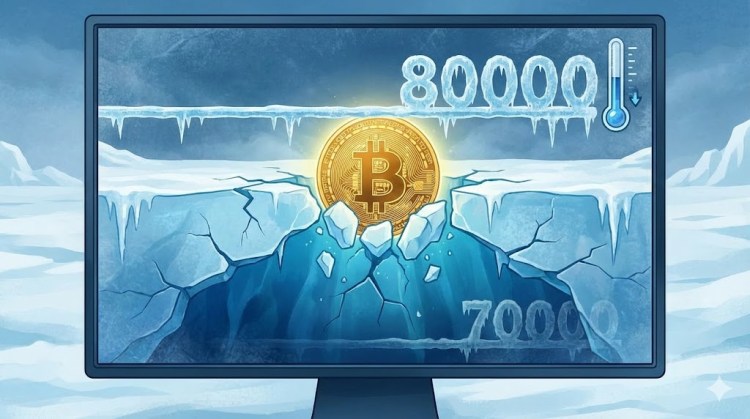
Bitwise advisor Jeff Park recently shared an analysis where he attributed the sharp BTC price drop that occurred on February 5, 2026, that led the price of the token to touch $60,000 to a cascading effect of derisking moves happening in TradFi rather than some terrible event in crypto like a hack or blow up of massive entities.
According to Park’s article, the catalyst for the crash was not triggered by crypto-specific fundamentals, nor was there some Black Swan event that happened that is yet to make the news.
He believes that the crash’s catalyst is most likely multi-asset portfolios deleveraging in a bid to reduce their exposure in a volatile market, and unfortunately, their hedged BTC positions were not exempted.
What followed was aggressive selling from other multi-strategy hedge funds, who had no choice but to also unwind their positions to maintain the integrity of their respective internal risk models.
He believes that all the deleveraging happening in the TradFi sector was what spilled over into BTC, amplifying volatility via mechanisms like short gamma effects from options and basis trades.
Catalysts behind the February 5 crash
In the article, Park highlighted how counterparties were forced to sell shares of Bitwise’s Bitcoin ETF (IBIT) during the market downturn, worsening the price decline, though it did not trigger serious long-term capital outflows.
He noted that despite the rapid drop in BTC price over two days, spot BTC ETFs overall saw net inflows, with IBIT alone adding around 6 million shares and growing by over $230 million.
Park also noted there has been a rebound since February 6 as some neutral strategies rebuilt positions, which adds more credence to the theory of the event being more of a resonance between TradFi risk management and derivatives rather than a structural breakdown in crypto.
Benefits of viewing the February 5 dump through Park’s lens
In his article, Jeff Park emphasized that accepting that what happened on February 5 occurred for the technical reasons he presented could signal an incredible opportunity for Bitcoin.
After all, if the incident is interpreted as a technical event and is linked to drama in the TradFi sector, reframing it as a temporary market inefficiency makes better sense than writing it off as a systemic flaw.
As far as Park is concerned, such a perspective could unlock several great opportunities for Bitcoin. Seeing it as a technical sell-off could aid rapid price recovery and encourage dip buying. This is because technical sell-offs create a reset without dealing lasting damage.
Park believes the February 5 crash triggered such a reset, and the proof is in how much BTC has already rebounded following the price dump.
Not only has the price been on a rebound, but spot BTC ETFs also saw net inflows exceeding $300 million, proof that many long-term investors treated the incident more like a dip buying opportunity.
Also, by linking the crash to TradFi mechanics, Bitcoin’s maturation as an asset class influenced by the global markets becomes more apparent, which could help it end talks of its existence in an isolated bubble.
While it is true that accepting the technical nature of the February 5 crash exposes some vulnerabilities, it also puts the system’s ability to absorb shocks without massive cash outflows on full display, something institutions and large-scale investors like to see.
Regardless of how the incident is ultimately interpreted by the powers that be, the recent crashes justify the stances of the likes of Eric Balchunas, senior ETF analyst at Bloomberg, who sees BTC as a very volatile commodity.
Balchunas wrote on X, “We never wavered in classifying btc as hot sauce, which it def is at least for the foreseeable future.”
Balchunas is also among those who don’t see the February 5 crash as that big a deal, and in one of his posts on the topic, he implied that the crash was a natural culmination of events.
He reminded his followers that BTC’s price has gone up by about 450% in two years, and so such pullbacks are simply par for the course.
Don’t just read crypto news. Understand it. Subscribe to our newsletter. It's free.







 English (US)