
 3 months ago
11198
3 months ago
11198
.png)
A detailed report by the esteemed crypto analyst SMQKE delves into the potential for XRP‘s long-term pricing. This analysis emphasizes several factors including significant institutional adoption, a continual reduction in supply, and substantial opportunities in the global payments landscape. The blockchain network that powers XRP, operated by Ripple, is especially favored by banks for optimizing cross-border transactions.
How is Ripple being adopted by traditional banks?
Ripple’s distributed ledger technology is increasingly being incorporated by banks to facilitate faster and less expensive international money transfers. Such integrations are anticipated to significantly increase transaction volumes on the XRP Ledger. The ecosystem’s reach extends beyond traditional banking, with fintech firms like Finastra, Volante, and CGI joining the network.
These entities enhance the ledger’s application beyond simple banking activities by allowing instant currency exchange and providing neutral liquidity. This innovation is likely to enhance the overall volume within the ecosystem, improving network efficiency over time.
What are the price implications of XRP’s fixed supply?
A critical element of SMQKE’s study is XRP’s capped supply. Contrary to many other digital currencies, XRP cannot be mined. As transactions occur, a tiny fraction of XRP is permanently taken out of circulation. While negligible in the short run, this gradual reduction in total available XRP could eventually lead to scarcity.
According to SMQKE, as more financial institutions adopt XRP, transaction volumes are predicted to rise substantially. This, combined with a decreasing supply, indicates a potential for price increases in the future as the XRP Ledger expands its influence.

Demand also plays a pivotal role in shaping price forecasts. XRP is building a reputation as a universal liquidity bridge, especially significant in the global payments industry, which processes around $180 trillion annually. Even a minor portion of these transactions being processed through XRP could markedly accelerate its adoption.
The report contemplates volatility issues, citing Ripple’s statements that as XRP’s utility grows, its role as a bridge currency will stabilize prices. With strengthened utility functions, the price volatility of XRP could diminish.
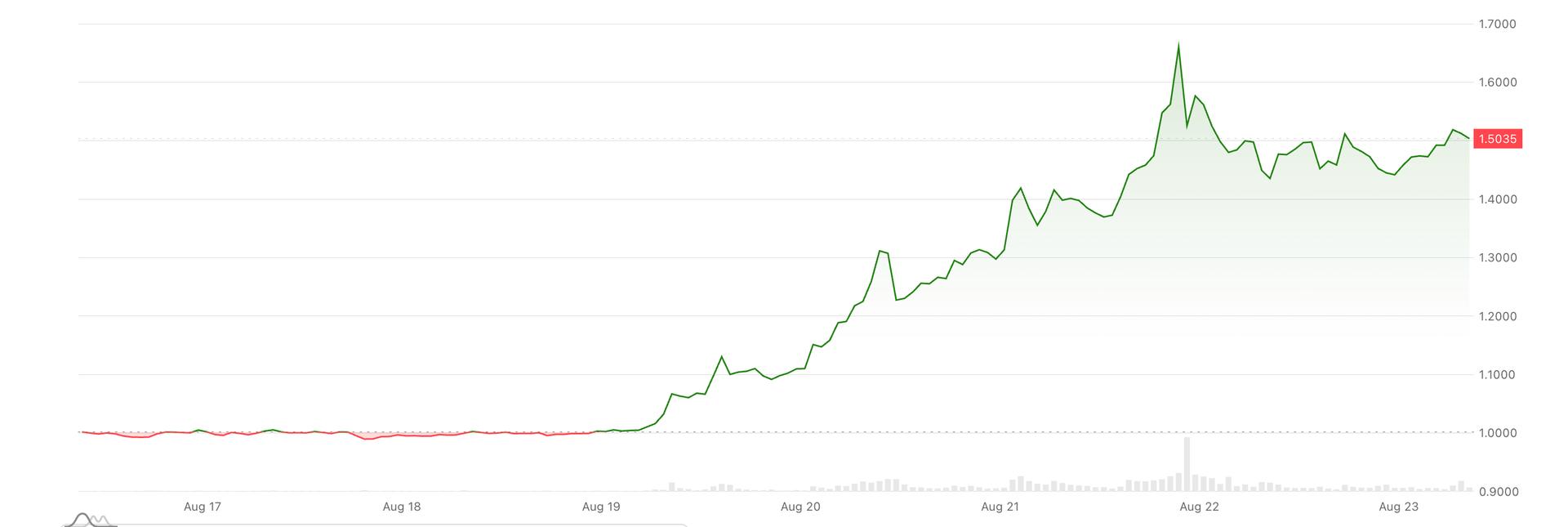
- XRP currently trades at $1.37, with $1.36 as a critical short-term support.
- Ripple’s stablecoin RLUSD is now available on OKX and Bullish exchanges.
- Over 280 trading pairs strengthen XRP ecosystem liquidity.
Ripple’s ledger technology is predicted to deliver increased transaction volumes and expand the user base for XRP Ledger, especially as it garners more acceptance in the financial industry.
Disclaimer: The information contained in this article does not constitute investment advice. Investors should be aware that cryptocurrencies carry high volatility and therefore risk, and should conduct their own research.





 English (US)